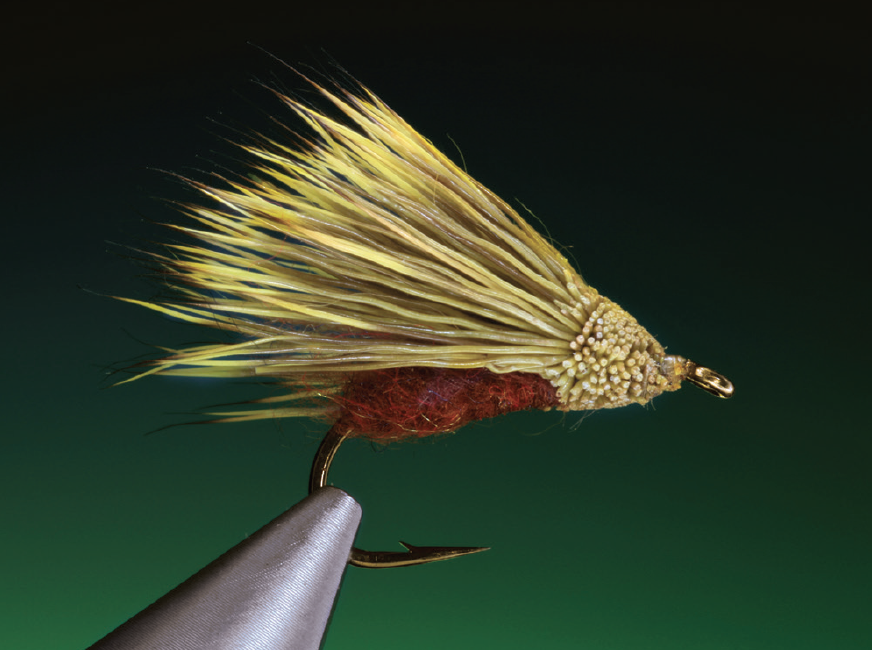
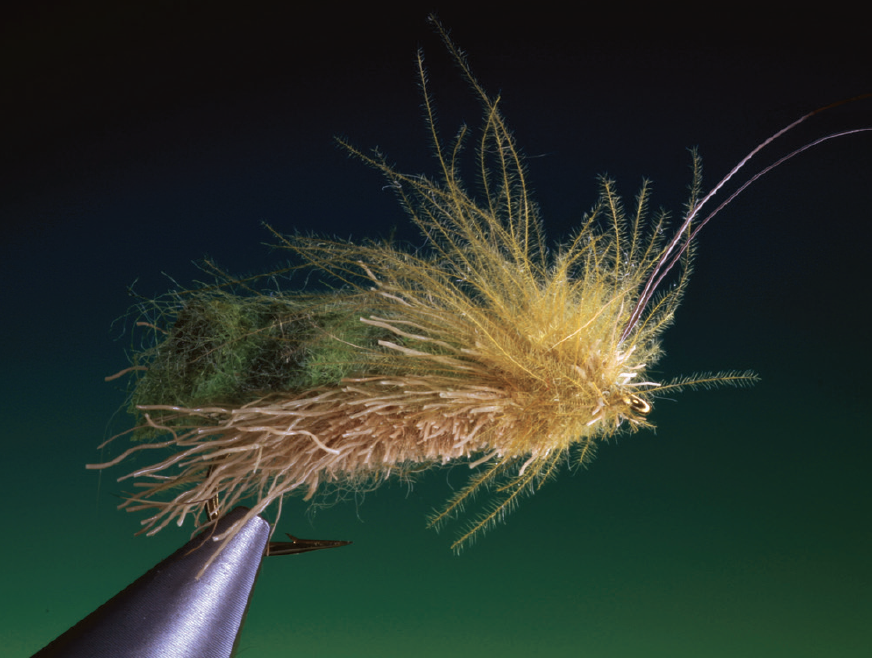
Golden Olive Streaking Caddis
Hook: Mustad R30-94833, sizes 18 to 10.
Thread: Gel spun.
Body: Synthetic dubbing of your choice.
Wing and head: Golden olive deer hair.
This is the golden olive variant of the original pattern called the Streaking Caddis. Swedish fly tying guru Lennart Bergqvist created the Streaking Caddis.
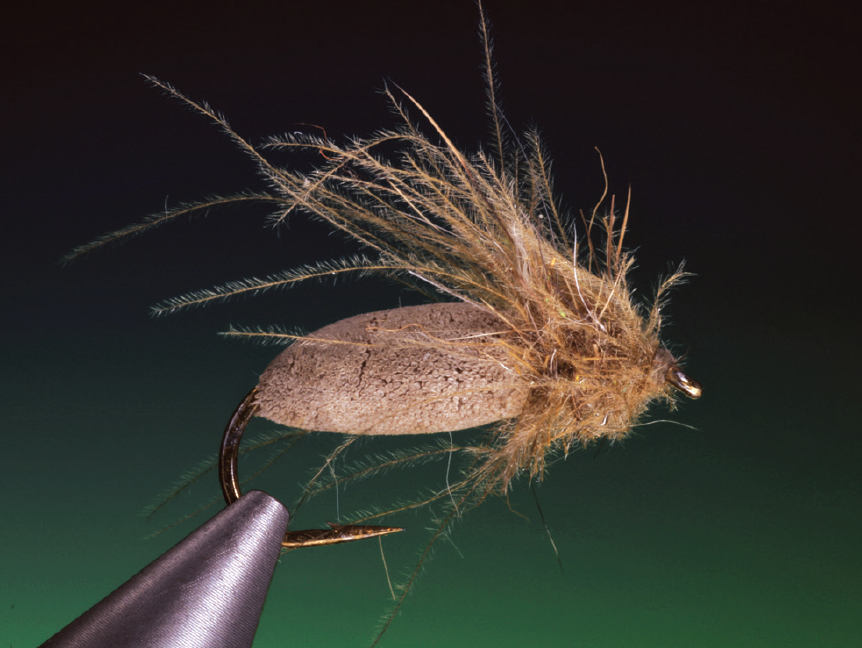
Deer-Hair Caddis Pupa
Hook: Mustad R30-94833, sizes 16 to 12.
Thread: Gel spun.
Body: Spun deer hair.
Shuck: Cul de canard.
Head: Hare’s-ear dubbing.
The Deer-Hair Caddis Pupa is one of my very early patterns. It was inspired by meeting the late Gary LaFontaine and seeing his Deep Sparkle Pupa. Spin and pack the body as tightly as possible. Fish the Deer-Hair Caddis Pupa using a sinking tippet. When the tippet pulls the fly under the water, it pops to the surface again like the real insect.
Shoeshine Caddis
Hook: Mustad R43, sizes 16 to 10.
Thread: Gel spun.
Body: Chamois and cul de canard.
Wing: Silicone shoeshine cloth cut into the shape of a wing.
Head: Chamois and cul de canard.
Tying the Shoeshine Caddis is the most challenging pattern in this collection of caddisfly imitations. While it’s probably too complicated for novice tiers, old hands at the tying bench will want to collect the materials and give it a try. (You’ll find an instructional video at my website, www.thefeatherbender.com.) And what about those materials?
The chamois is a species of goat native to the mountains of Europe. The hair is similar to deer body hair, but is coarser. Most North American fly shops do not stock chamois, but some online retailers do. You may wish to experiment and substitute another coarse hair material. The silicone-impregnated shoeshine cloth floats like a cork and is easily clipped into the shape of wings; you’ll find this product at most large retailers.
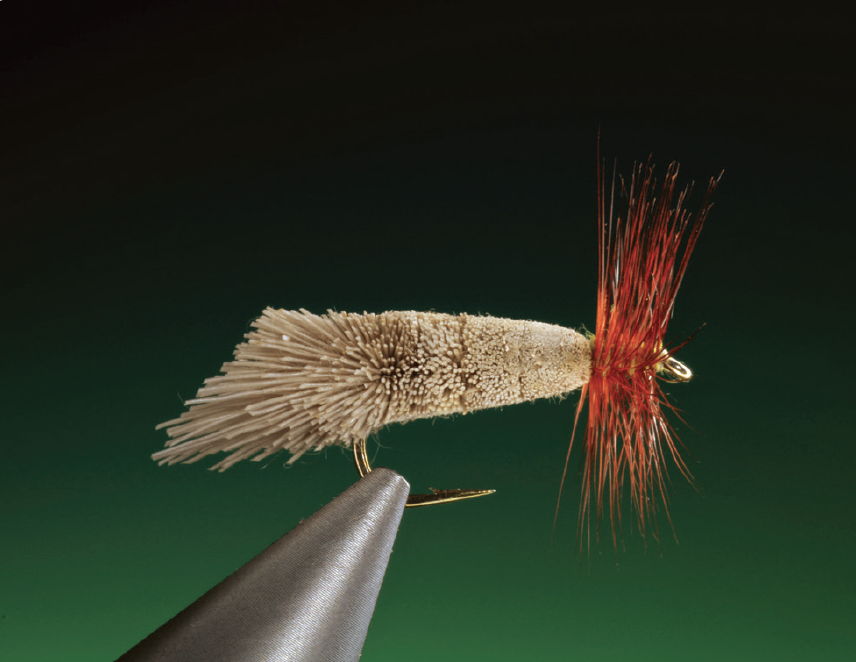
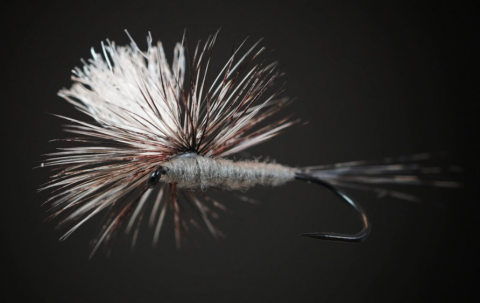
Goddard Caddis
Hook: Mustad R43, sizes 16 to 8.
Thread: Gel spun.
Body: Natural deer hair.
Hackle: Brown.
First published in John Goddard’s book, The Super Flies of Stillwater, in 1977, the G&H Sedge (named for John Goddard and Cliff Henry) has established itself as a modern classic. Goddard, a fly fishing entomologist, and well-known British angler Cliff Henry, created this pattern, and it became an instant hit with the stillwater anglers of the British Isles. “Sedge” is the British term for a caddisfly, so the name change to simply Goddard Caddis probably occurred when the fly hopped across the pond to North America. Tying the Goddard Caddis is a great way to learn how to craft small flies using spun-and-clipped deer hair.