Whatever trout think it is, this fly just works — especially in winter.
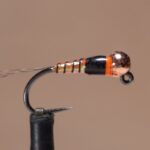
Although I call this fly a Micro Egg-Sucking Leech, I’m not exactly sure trout mistake it for a leech. Instead, they may simply believe it is one of any number of living things — and living things mean protein, and protein provides the energy trout need for survival. This leech can be viewed as a mash-up of four very effective fly patterns: Landon Mayer’s Mini Leech, Pat’s Rubber Legs, a basic egg fly, and maybe a bit of Frenchie thrown in for good measure. For whatever reason, the combination simply works — especially during the winter months.
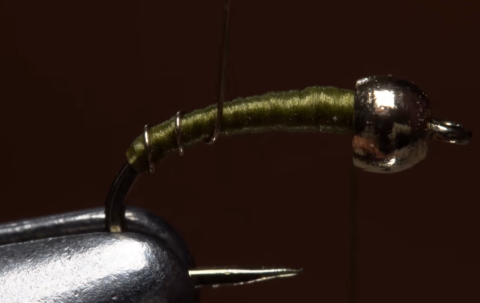
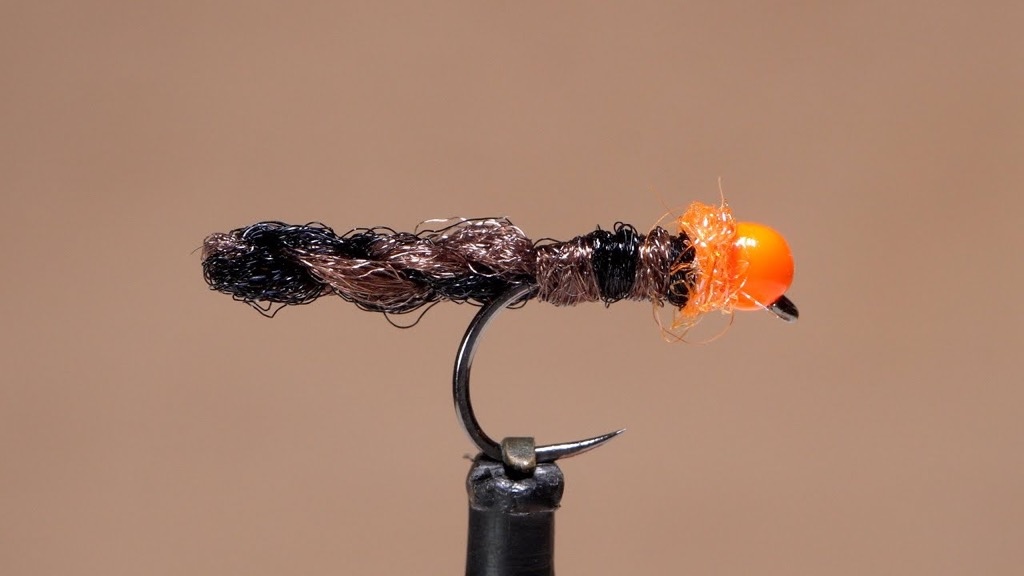
A Pat’s Rubber Legs stonefly nymph ranks among the most effective flies ever conceived. I tie a slew of variations of the original, and all seem to work. The one thing these variations have in common is variegated coffee-and-black chenille, which gives them a mottles appearance. I’m convinced that this mottled coloration is the key to the fly’s effectiveness. Having experimented with other color combinations and materials, I’ve found that they work as well, as long as they can be combined to produce something with a mottled look. On this fly, that look is achieved by twisting two differently colored strands of Fulling Mill Ultra Dry Yard together — first furling them to form the tail, then wrapping them to form the body.
The orange bead serves two functions, weight being the most obvious. Because the fly is tied on a jig hook with a slotted tungsten bead, it sinks fast and gets down to where trout like to be — quickly. Also, because Ultra Dry Yarn is slightly buoyant, the fly tends to ride in a nearly horizontal manner — not quite like a balances leech, but close.
The bead’s second function, since it’s orange, is either to imitate an egg or simply to draw the trout’s attention — who knows? But orange beads certainly seem to work, again, particularly in winter. The orange dubbing behind the bead helps to cover up unsightly thread wraps and gives the fly a Frenchie look, which is always a good thing.
Fishing the Micro Egg-Sucking Leech is much like fishing any other nymph, whether you’re using it below an indicator or Euro-nymphing. Cast upstream, allow the fly to get to depth, and aim for as drag-free a drift as possible. The slight difference comes at the end of your drift: stop the rod to allow the fly to slowly rise in the water column. It’s remarkable how many takes I get just before I’m about to recast.
The Micro Egg-Sucking Leech can be tied in a variety of color combinations. I tend to go darker for flies used during the colder months and lighter for warmer months. Materials other than Ultra Dry Yarn — but similar to it — can certainly be used. But the translucency and slight buoyancy of Ultra Dry Yarn make it a really good choice.
Tim Flagler is a leading fly-tying instructor, appears at tying shows across the United States, and guides anglers to fly-angling destinations around the world. To learn more, visit tightlinevideo.com. Tim and his wife, Joan, live in New Jersey.
Micro Egg Sucking Leech
Detailed instructions for tying a Micro Egg Sucking Leech. This is part of a series of Tim Flagler’s collaboration with Fly Tyer Magazine. Check out his article about the fly in the Winter 2026 issue of Fly Tyer Magazine. Recipe: Hook: Fulling Mill 5125, Jig Force Short, black nickel, size 18.