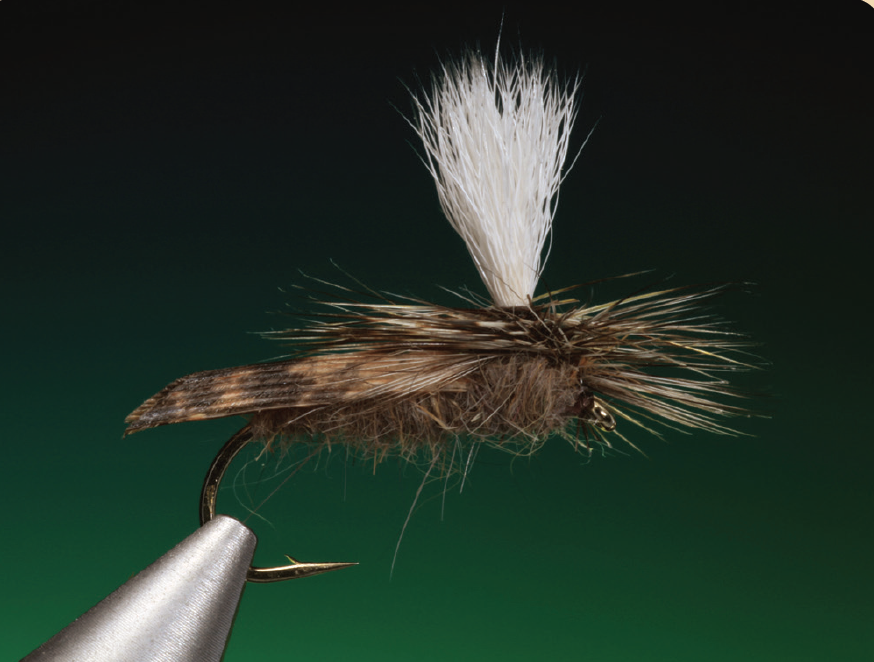
Para-Wing Caddis
Hook: Mustad R43, sizes 16 to 10.
Thread: Gray 8/0 (70 denier).
Body: Muskrat dubbing.
Post: White calf body hair.
Wing: Turkey.
Hackle: Brown and grizzly.
This is an unusual caddisfly imitation; very few are tied with parachute hackles. The wings— slips of mottled turkey coated with head cement to make them stronger—make the fly fish deeper in the surface film than most other dry flies. The calf-body hair post makes the Para-Wing Caddis extremely visible even in fast-flowing water.

X-Caddis
Hook: Mustad R30-94833, sizes 18 to 10.
Thread: Gel spun.
Tail: Z-lon or Sparkle Yarn.
Body: Beige Super Fine Dry Fly Dubbing.
Wing: Natural deer hair.
According to Colorado fly tier Charlie Cravens, “The X-Caddis comes from Yellowstone fishing guru Craig Mathews. Craig is the guy who brought us the Sparkle Dun and a host of other effective patterns, all trademarked by their simplicity. The X-Caddis is no exception, and can be whipped out by the dozens.” That’s high praise from an exceptional tier!

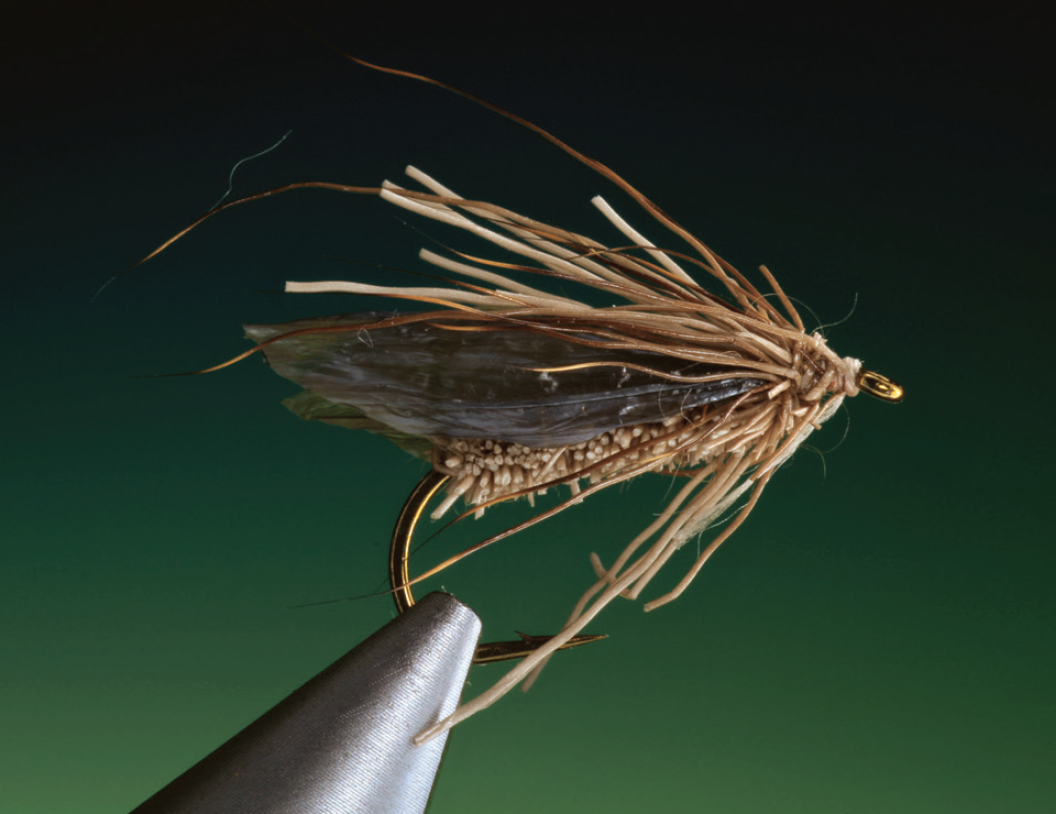
CDC Caddis
Hook: Mustad C49S, sizes 16 to 10.
Thread: Brown 8/0 (70 denier).
Body: One beige cul de canard feather.
Wing: One female mallard breast feather.
Overwing: Two beige cul de canard hackles.
Every fishing season, cul de canard grows in popularity for designing fish-catching flies. These wispy feathers float well, and the fish seem to mistake the fibers for the legs and other appendages of insects. While most tiers still use CDC for only the wings of flies, you can also place these feathers in a dubbing loop; that’s how I make the overwing on the CDC Caddis.
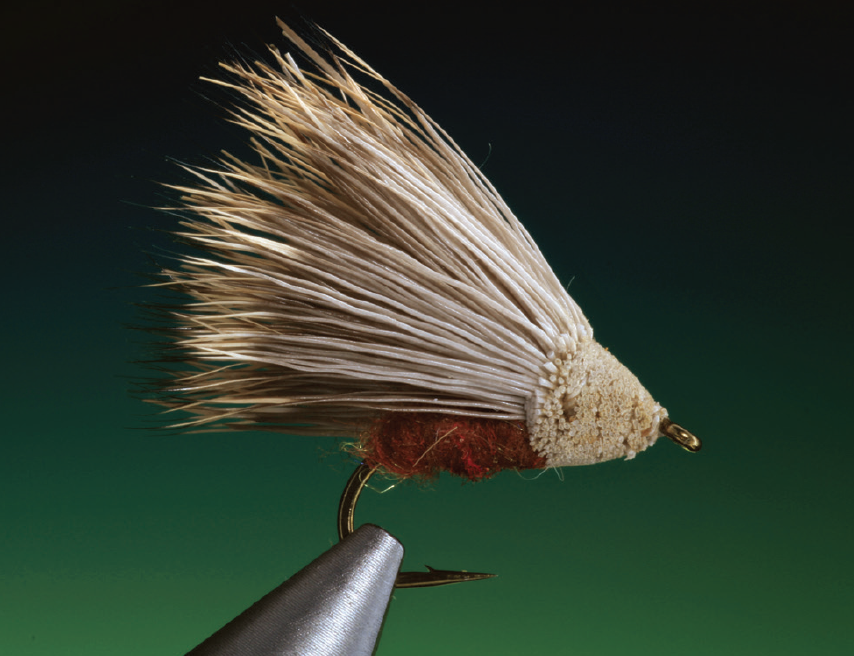
Streaking Caddis
Hook: Mustad R30-94833, sizes 18 to 10.
Thread: Gel spun.
Body: Synthetic dubbing of your choice.
Wing and head: Natural deer hair.
If you haven’t tried the Streaking Caddis, you should; I can’t recommend it enough. Make the body using your favorite high-floating synthetic dubbing. One of the most common mistakes is tying the wing and head separately; use one large bunch of deer hair for both. Without a doubt, the Streaking Caddis is the most popular caddisfly pattern in Scandinavia, but it will catch fish wherever you find trout feeding on these insects.