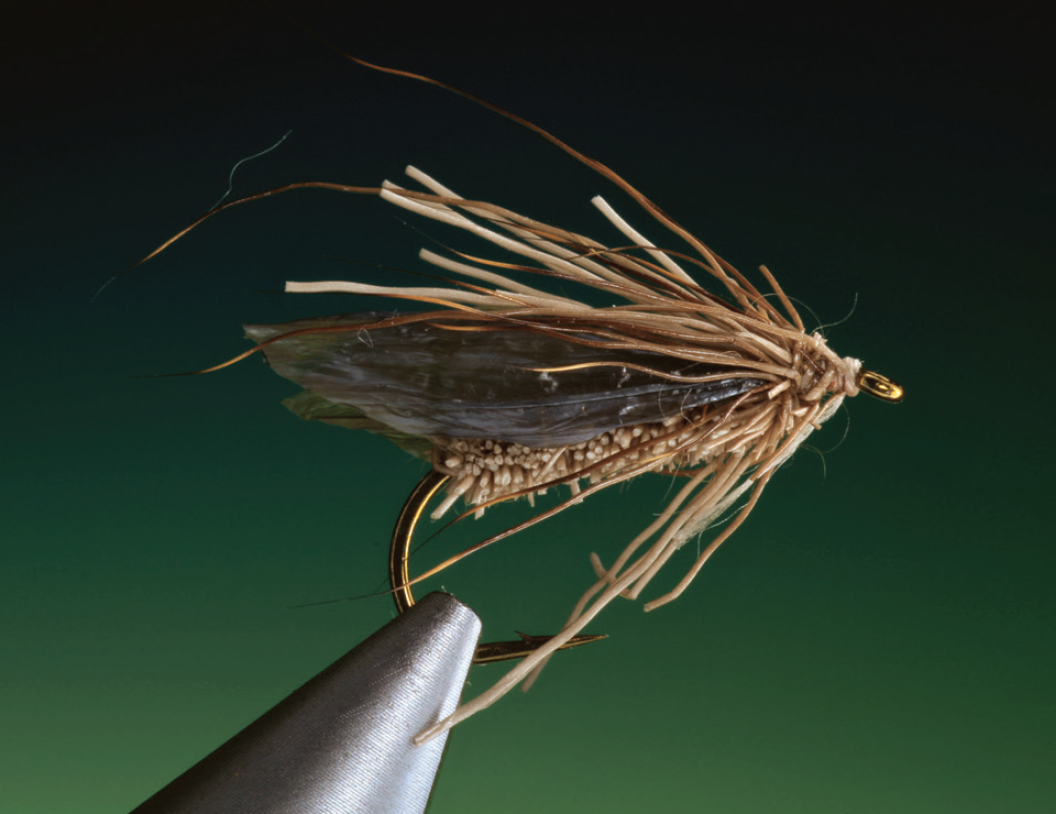

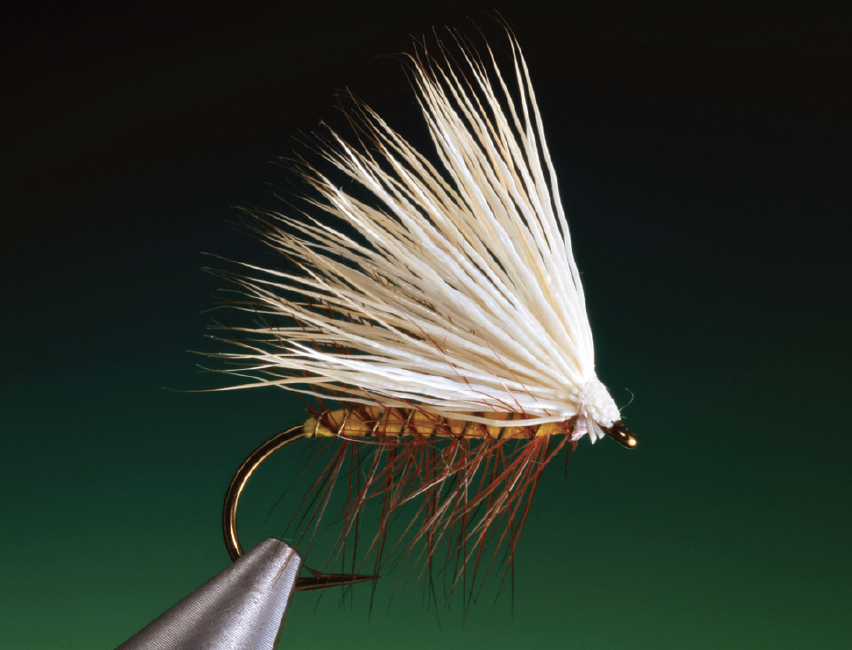
Europea 12
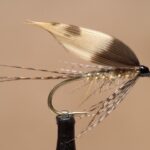
Hook: Mustad R50, sizes 16 to 10.
Thread: Brown 8/0 (70 denier).
Body: Light brown Antron.
Rib: Yellow 3/0 (210 denier) thread.
Wing: Two female mallard breast feathers.
Hackle: Brown and grizzly.
This elegant pattern is from the French fly tier Tony Burnand, and unlike the original, you can tie it with a parachute hackle. When made with the traditional hackle, as seen here, cutting away the fibers on the underside of the hook creates a lower profile.
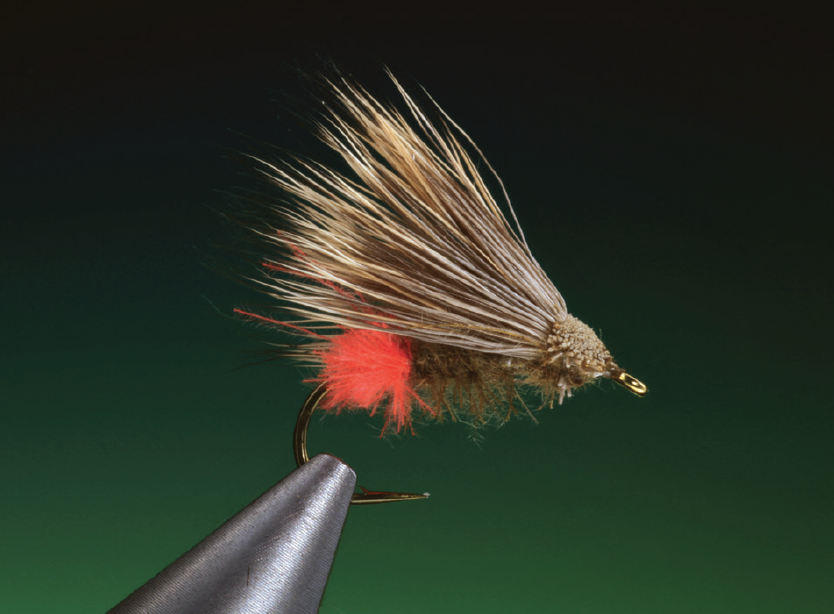
Double-D Caddis
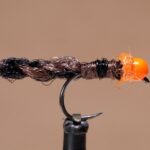
Hook: Mustad R30-94833, sizes 16 to 10.
Thread: Gel spun.
Hot spot: Pink cul de canard.
Body: One olive cul de canard feather.
Wing: Natural deer hair.
Cul de canard is used for more than the wings on dry flies. It is also a good material for making bodies. On the Double-D Caddis, tie in the tip of a CDC feather at the end of the hook shank. Next, twist and wrap the feather up the shank to create the body of the fly. Once you try this simple method, you might never use dubbing and a dubbing loop again!
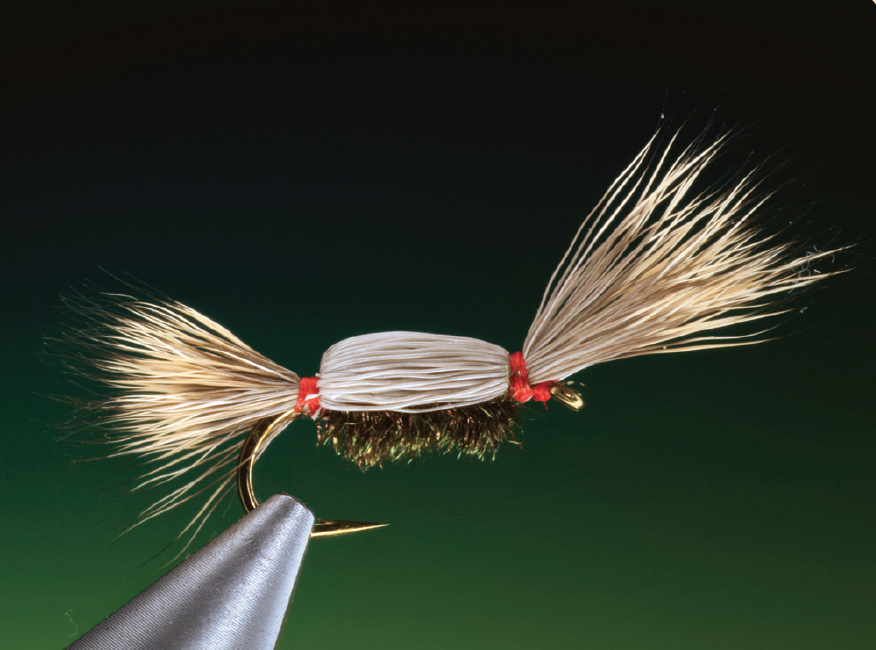
Tom Thumb
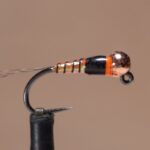
Hook: Mustad R30-94833, sizes 16 to 10.
Thread: Red 8/0 (70 denier).
Body: Peacock herl.
Tail, wing, and back: Natural deer hair.
For the most part, this little deer-hair pattern seems to have been almost forgotten. Although it is said that the Tom Thumb was created in England in the 1940s, this seems questionable; deer hair was not a popular material in England at that time. The pattern was, however, popularized in Canada, and Canadian tiers have used deer hair for many decades; is the Tom Thumb actually a Canadian fly? Regardless of its origins, it is effective at catching rising trout. It skates across the surface of the water, imitating a real caddisfly.
Elk-Hair Caddis
Hook: Mustad R30-94833, sizes 18 to 10.
Thread: Gel spun.
Body: Golden yellow floss.
Hackle: Brown.
Rib: Fine copper wire.
Wing: Bleached elk hair.
Since Al Troth wrote about this simple pattern for Fly Tyer magazine in the 1970s, it has become one of the most popular dry flies in the world. It’s almost impossible to think of a fly fisherman who regularly encounters hatching caddisflies who doesn’t have at least a few of these imitations in his fly box. I tie the Elk-Hair Caddis, and many other small patterns, using 50 denier gel-spun thread because it has incredible strength for its narrow diameter.
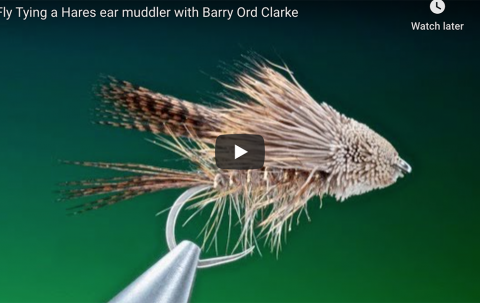
Barry Clarke is a master fly designer and photographer. His patterns are always first rate, and his tying methods are sound. He also has a series of some of the best fly tying instructional videos we have ever seen, including videos on how to make many of the unusual flies in the article. See them at www.thefeatherbender.com.