Synthetic Caddisfly & Stonefly Wings
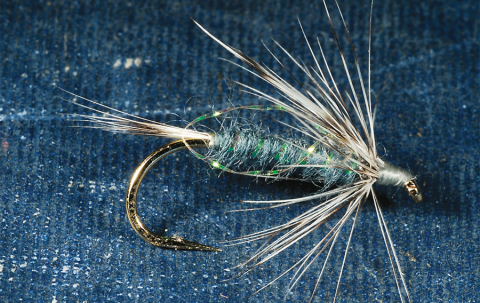
This is perhaps the simplest application for adding synthetic wings to a dry fly. I use tan and medium gray material for these wings. There are certainly some species of caddisflies and stoneflies that have brightly colored wings, but tan or gray seem to work best. As with most traditionally tied flies, two main problems often crop up: Tiers don’t use enough hackle, and the length of the hackle fibers is usually too long. Consider covering one-third of the hook shank with wrapped hackle; this seems like a lot, but this sort of high-floating pattern will twitch and skitter across the surface. And use hackles with fibers that extend no more than 1 1 /2times the width of the hook gap.
Step 1 – First, tie the body on the back two-thirds of the hook shank; leave a lot of room for the hackle. Clip the end of a bunch of wing material even. Pinch the material to the top of the hook shank with the trimmed end just behind the hook eye. Tightly wrap the thread forward, stopping behind the hook eye; keep the wing material on top of the hook while working. Next, wrap the thread toward the rear of the fly. Before getting to the base of the wing, work the material down along both sides of the fl y using your thumbnail or the back of the scissor blade. Hold the wing in position, and finish securing the material with the thread. This trick gives the wing a tentlike appearance similar to a real caddisfly or stonefly.

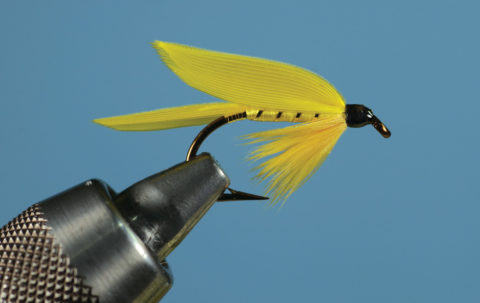
Step 2 – Tie on the hackle and complete the fly. The synthetic wing and bushy hackle collar make this pattern stay afloat in the roughest water.

Dennis Potter is a creative fly designer and superb fly tying instructor who lives on the banks of the Au Sable River in Michigan. To learn more about his flies, see a schedule of his fly tying classes, and much more, go to his website, www.riverhouseflyco.com.