That night we launched our kayaks just after midnight and paddled 11 miles back to Flamingo under a nearly full moon. It was a beautiful evening. During the day, the east wind didn’t stop blowing while the sun was shining, but paddling in the dark was great for beating both the wind and the heat. After the moon set, we had an hour of spectacular star gazing, complete with meteors and satellites. I do not have the words to adequately describe that fantastic hour.
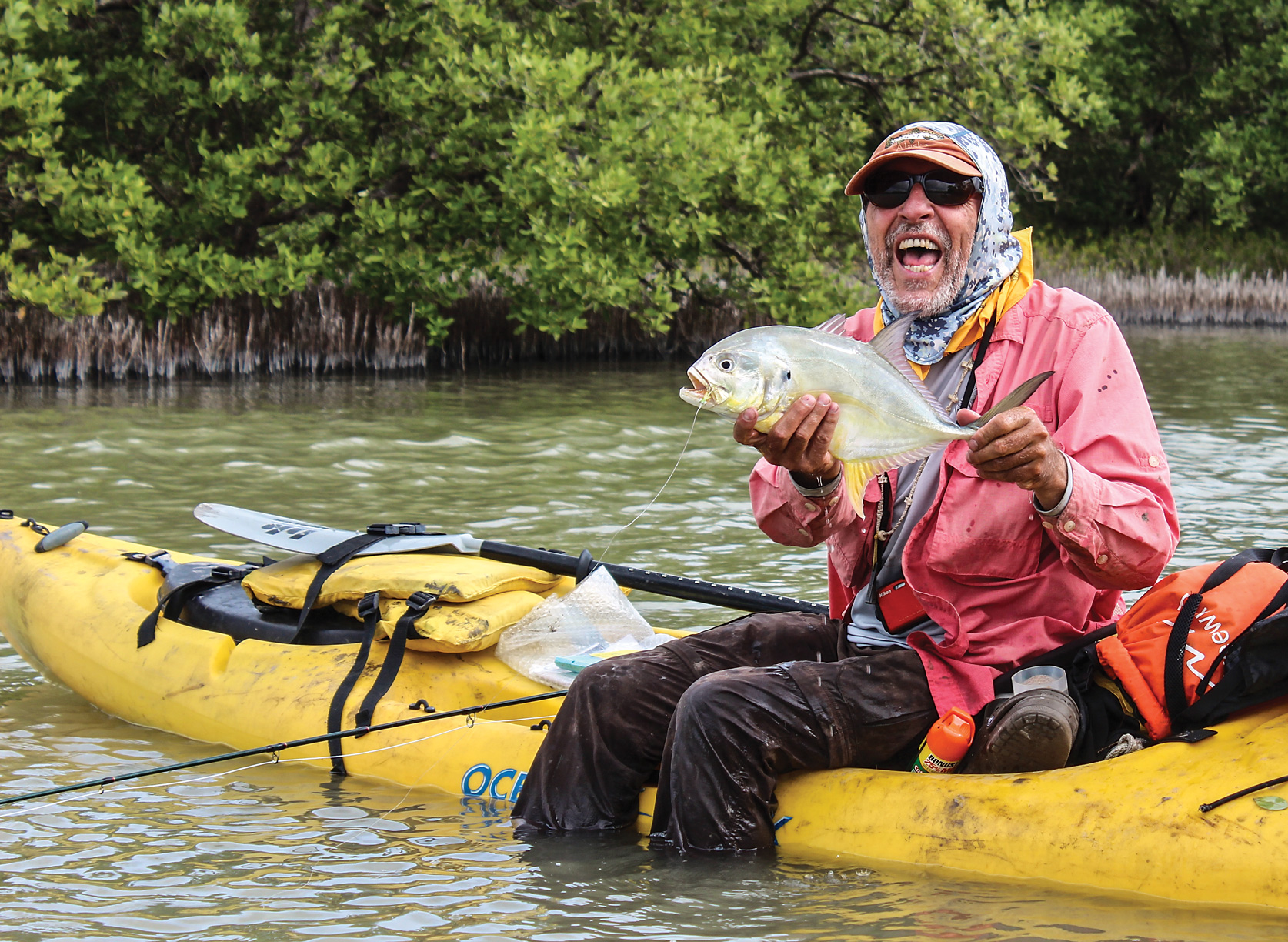
As it got light, we fished in the dredge hole behind Flamingo Campground. I caught several crevalle jacks and ladyfish using a pink Clouser Minnow, but the best strike—a jack that weighed about five pounds—came on a Floozie popper. Some big tarpon rolled but did not bite our flies.
We spent Thursday in Flamingo unpacking, cleaning, repacking, and preparing for the second phase of our journey
Part Two
On Friday morning we launched the kayaks at West Lake and headed to Shark Point. We paddled through a series of lakes, ponds, and tidal creeks. Although the fishing was slow, I managed to catch a couple of baby tarpon on a mini Gurgler.
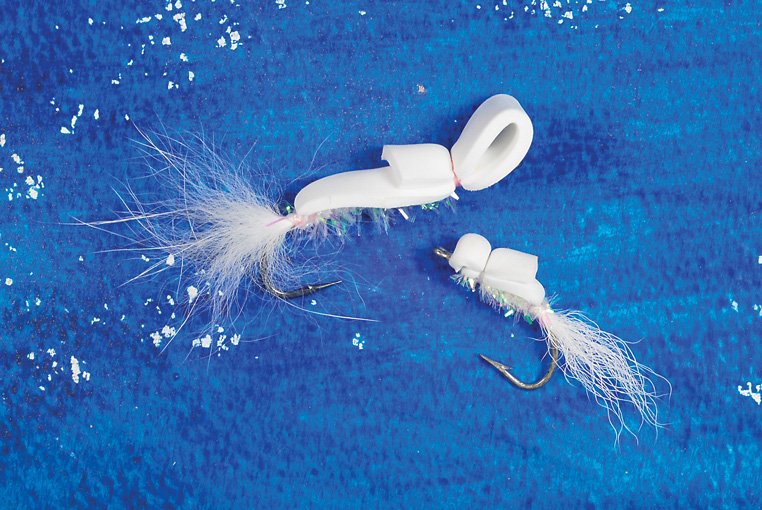
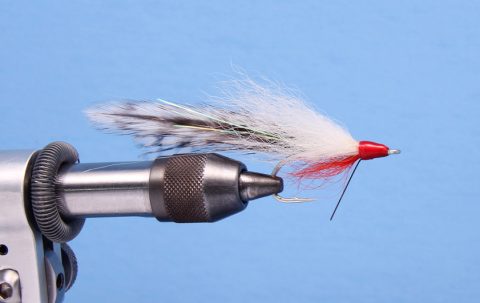
Gurgler
Hook: Long-shank saltwater hook, size 4 or 2.
Tail: White marabou or calf tail.
Body: White Estaz.
Back: White craft foam
Note: I fold the foam back over the eye of the hook to create buoyancy and longevity.
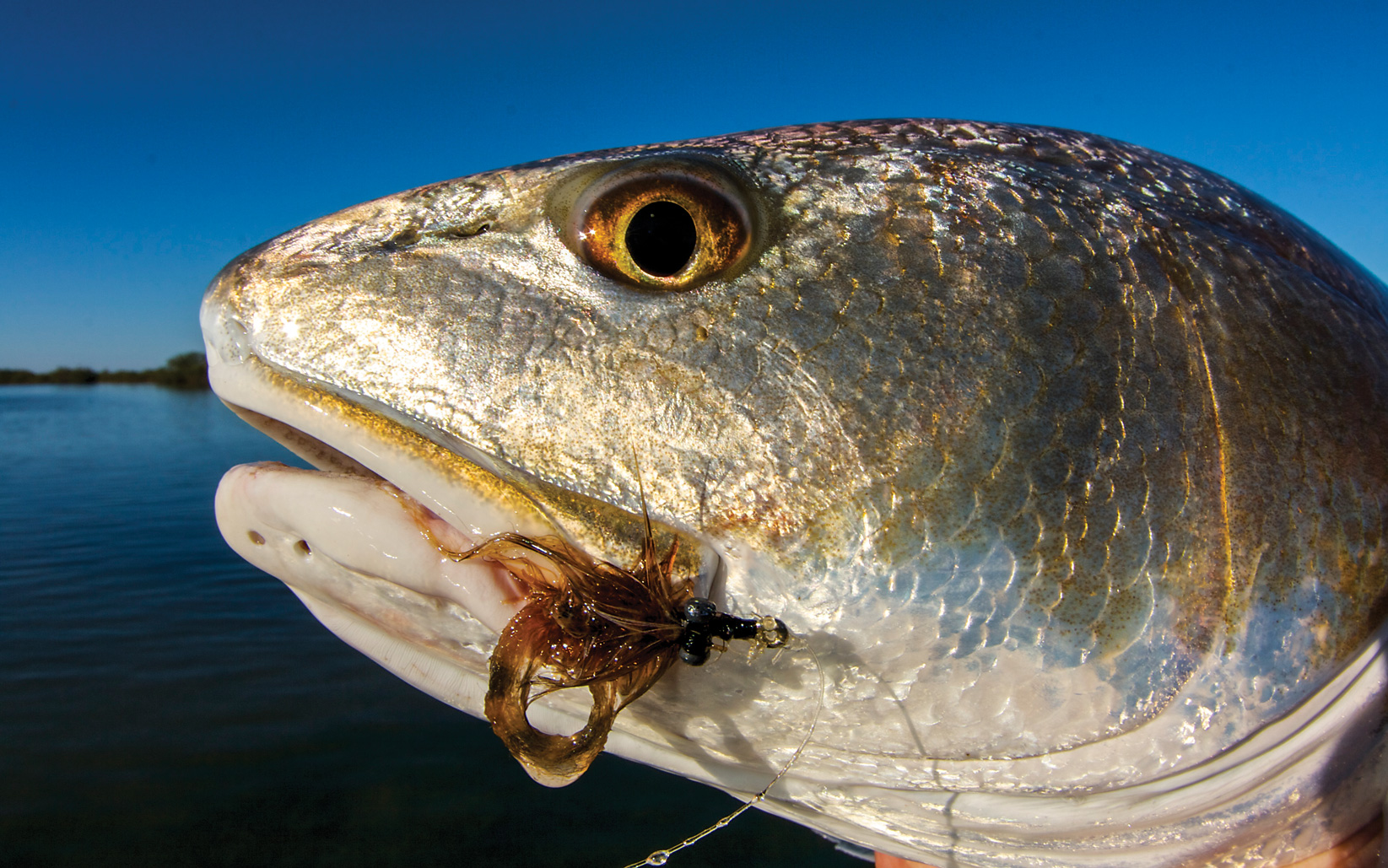
Once we reached Garfield Bight, Mike continued crushing the snook. I had three great shots at redfish, getting one on a brown Slider. We camped on the Shark Point Chickee, but don’t go there if you have a guano allergy; the area is full of bats.
Saturday offered the best weather of the week, a light east wind instead of the 20-knot gale we had experienced earlier in our trip. We gently floated across Snake Bight, getting shots at spooky snook and redfish the whole way. I caught a snook using a Synthetic Minnow, and another redfish on the Slider. At the Snake Bight channel, I hooked and lost another snook using a Chenille Crab. We were soon back at Flamingo, loading the car for the ride home.
We had a great time but didn’t meet all of our goals. Mike did not get that 30-inch snook, and I did not get a sea trout. A return trip is in order—the sooner, the better.
Planning and Packing for Your Trip
When planning your fishing adventure to Everglades National Park, visit the trip-planning page on the park’s official website: www.nps.gov/ever/planyourvisit/index. Google Maps is another excellent resource for good information. Finally, either a nautical chart or a Top Spot fishing map will give you a good overview of the available waters.

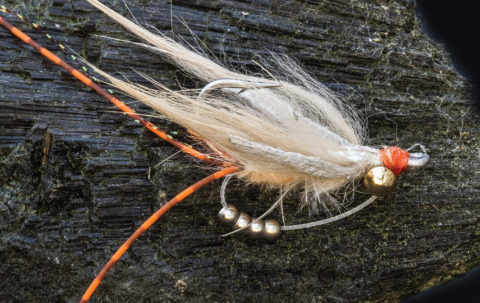
Redfish Worm
Hook: Regular saltwater hook, size 4.
Tail: Black arctic fox fur or a short piece of a bunny Zonker strip.
Body: Black Estaz.
Eyes: Lead dumbbell.
Note: My box always contains a few miscellaneous patterns. The Redfish Worm is a nice change when you feel like casting a different fly.
Mike and I approached packing almost like we were going on a backpacking trip. The volume and load capacity of a kayak is small, so you need a minimalist mentality. We each brought a light one-man tent, a light sleeping bag, a sleeping mat, and a small pillow. I had a single change of clothes, a sweater, and a rain jacket.
For food we took real grub and a single-burner propane stove, and a pot and pan for cooking. You must carry fresh water, which is a significant source of both bulk and weight.
Mike used his telephone as a GPS unit, and it saved our butts one night. We also navigated using a Top Spot fishing map used in conjunction with a compass.
I took a six-weight outfit and a spare rod, a spare kayak paddle, a first aid kit, a small anchor, and all the USCG required safety gear. All my smaller fishing tackle, such as flies and spare leaders, fit into a Simms Dry Creek Hip Pack. And finally, be sure to take sun block and a couple of cans of insect repellant.
Flies for Fishing the Everglades
I prefer sight fishing whenever possible, even when another technique might catch more fish. Because a lot of places in the Everglades have dirty water, sight fishing is not always possible, so you’ll need flies for both sight fishing and blind casting.
The majority of the fish we targeted eat smaller baitfish, shrimp, and crabs. Your flies should imitate these forms of food. Snook, tarpon, crevalle jack, and sea trout all like to feed looking up, but redfish feed looking down, so you will need patterns to cover the entire water column.
You’re going to fish along mangrove shorelines, around oyster bars, and on grass flats. Most flies will need weed guards. I prefer double-prong weed guards made of stiff 20-pound-test nylon.
Capt. John Kumiski has specialized in guiding clients in the terrific waters surrounding Florida’s Space Coast. We’ve fished with John, and it was a wonderful trip we’ll never forget! Contact John at his website, www.spottedttail.com.