I use goose biots whenever possible because I think they tie prettier, more durable flies. Unfortunately, goose biots are usually too short to wrap bodies on anything larger than standard size 14 dry flies. In the case of larger or fatter flies, I am forced to use turkey biots. Goose biots come in many shapes and lengths, even on the same stem. Use short, stout goose biots for making tails on Copper Johns; save the longer biots for wrapping bodies and tying wings on Prince Nymphs. Also, pay attention to the widths of the biots you use. Narrower biots create more closely spaced ribbing; as a result, narrow biots are suitable for wrapping only shorter bodies.
After finding the perfect-sized biot, pull—do not clip—it from the stem. This trick is especially important when wrapping a biot body because there is often little excess material to gasp with your hackle pliers. Furthermore, the curved notch at the butt end indicates what type of rib a biot will create. Since consecutive biots on a stem are of roughly equal size, I find the correct size for the job, and then break the stem at that point. You can then peel the biots from the broken ends of the stem. Also, be sure to moisten biots before wrapping or folding them around the hook to prevent cracking; place enough biots for the number of flies you want to tie, plus a couple extra biots, inside a wet, folded paper towel.
LESSON 4
Turkey Biots for Fatter Bodies
Turkey biots are longer and are ideal for tying larger fl ies—say size 14 and above—as well as fat-bodied patterns. In my former guiding days, I was fortunate enough to fi sh long, trickling drake hatches in the drainages just east of Yellowstone Park. These drakes had shorter tails and fatter bodies than most other mayfl ies, which called for a pattern using a stout elk-hair-tail and olive or gray turkeybiot body. For this example, I added some dubbing to the abdomen to re-create the tapered body of the natural. I usually clip the hackle fi bers even with the middle of the hook gap. This makes the fly less attractive, but it sits more naturally on the water.
Turkey Biots for Fatter Bodies
Finally, don’t limit yourself to goose and turkey biots, especially when it comes to tying tails and antennae. Other species of birds, such as partridge, pheasant, ducks, chickens, and other large birds, all have biots of differing colors, shapes, and textures. Experiment with any biots you can get your hands on, and have fun developing your own patterns.
Once I figured out the basics of using biots, they quickly became one of my favorite materials. They are inexpensive, easy and efficient to use, and add a sense of realism that many other materials do not. Over the past decade, I have discovered or gleaned from other sources many ideas for using biots. Study the following lessons, and you will be tying beautiful and effective biot patterns in no time!
LESSON 5
Stonefly Antennae and Tails
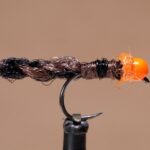
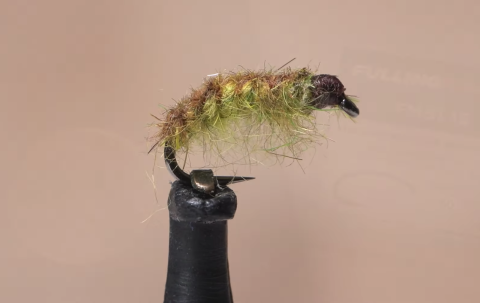
I will do whatever it takes (almost) to gather quality fly-tying materials, including scavenging road kill. Such is the case with the black chicken biots I use as antennae and tails on their namesake, the Roadkill Stonefly. I tie on the biot antennae first—before wrapping the thread base—and use the hook eye to help fl are and position them. If I use a bead head, I whip-finish and clip the thread after tying the antennae, and then slip the bead into position.
Stonefly Antennae and Tails
Andrew Puls is a brilliant young tier who lives in Montana. Stay tuned for Andrew’s guide to fishing Montana’s famous spring creeks, which will appear in a future issue of this magazine.
FLY BOX

Biot Midge Pupa
HOOK: Tiemco TMC100 or equivalent, sizes 22 to 18.
THREAD: Gray 8/0 (70 denier).
ABDOMEN: Gray goose biot.
THORAX: Dark gray hare’s ear dubbing
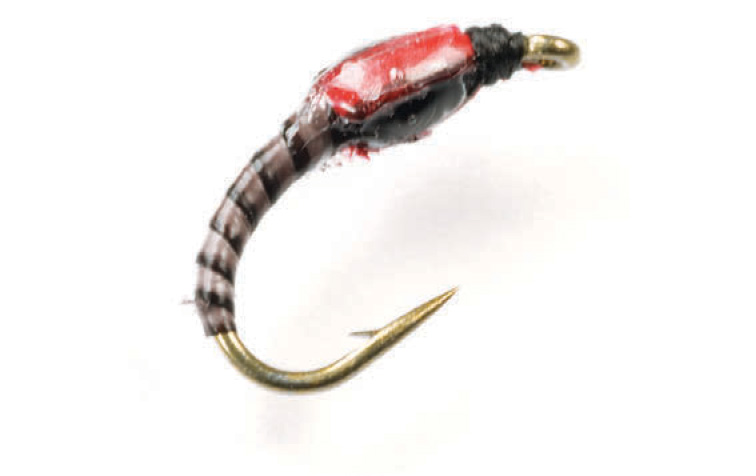
Blood Bud Midge Larva
HOOK: Tiemco TMC2487 or equivalent, sizes 20 to 16.
THREAD: Black 8/0 (70 denier).
BODY: Nature’s Spirit Trico goose biot.
WING BUD: Nature’s Spirit Blood Red Midge goose biot and epoxy.
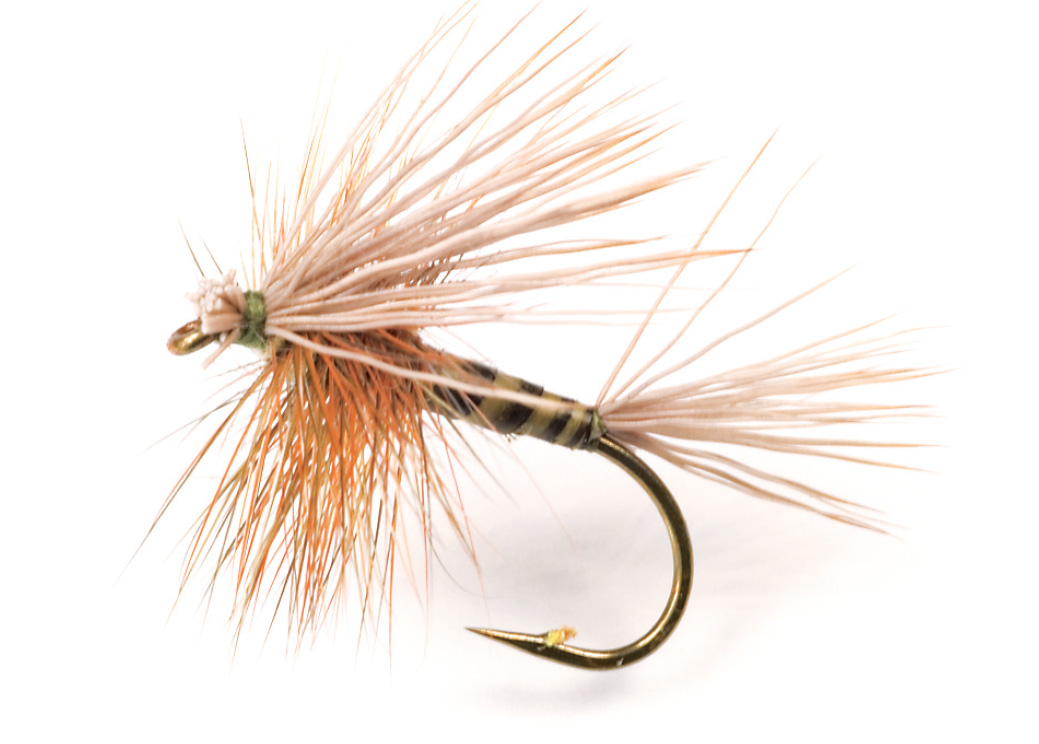
Freestone Drake
HOOK: Tiemco TMC100 or equivalent, size 12 or 1 12 or 10.
THREAD: Olive 8/0 (70 denier).
TAIL: Dun cow elk hair.
ABDOMEN: Olive turkey biot.
UNDERBODY: Fine dubbing (any color).
THORAX: Yellow dubbing.
HACKLE: Olive and brown.
WING: Dun cow elk hair.

Roadkill Stonefly
HOOK: Dai Riki 700 or an equivalent, size 6.
BEAD: Black 3 /16-inch bead.
THREAD: Black 6/0 (140 denier).
ANTENNAE: Black chicken biots.
LEAD: 0.030-inch-thick lead or lead substitute wire.
TAIL: Black chicken biots.
DUBBING: Kauffman SLF Black Stonefly Blend.
RIB: Black Ultra Wire.
LEGS: Black hen saddle.
WING CASE: Turkey tail.