by John Wood
Northwest Wyoming offers some of the finest trout fishing in the world. John Wood offers advice and patterns for enjoying the trip of a lifetime. Pack your bags and let’s go!
Nestled between the foothills of the Absaroka mountains to the west and the semi-arid Bighorn Basin to the east, Cody, Wyoming, seems an unlikely trout-fishing destination. It’s one of those off-the-beaten-path locations you only seem to find by stumbling across it while traveling somewhere else. The first thing you notice when entering Cody is the large number of businesses and attractions bearing the name of the iconic showman, William F. “Buffalo Bill” Cody. He helped found the town in 1896.
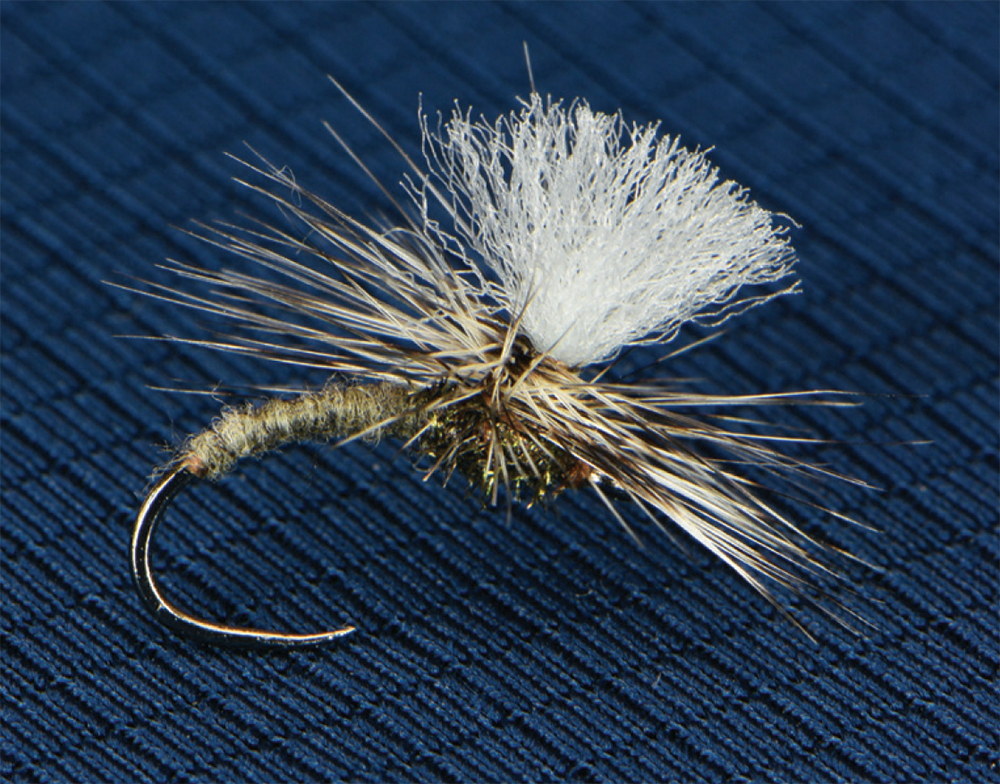
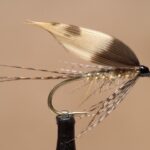
Adams Klinkhammer
Hook: Firehole 317, sizes 16 to 12.
Thread: Brown 14/0 or the smallest thread you have.
Abdomen: Adams gray dubbing.
Rib: Size 6X tippet material.
Wing post: Polypropylene yarn (light gray).
Thorax: Peacock herl.
Hackle: Grizzly.
Cody sports an undeniable cowboy theme, including staged gunfights just off Sheridan Avenue outside the Irma Hotel; this is where the bad-guy actors meet justice every evening from June through September. Summer also features a nightly rodeo on the far western edge of town near Buffalo Bill Reservoir.
Located at the west end of Sheridan Avenue, Wyoming highway 14 is the main east-west route through town and the road leading to the eastern entrance of Yellowstone National Park; keep your eye peeled for the Buffalo Bill Center of the West. The Center contains five museums housed under different names: Buffalo Bill, Plains Indian, Whitney Western Art, Draper Natural History, and Cody Firearms. These terrific museums offer a unique look at the area and its place in Western history. This attraction can easily consume hours of non-angling time, and is a welcome alternative to fishing when the occasionally brutal afternoon winds howl down the North Fork Valley off the edge of the Yellowstone Caldera.
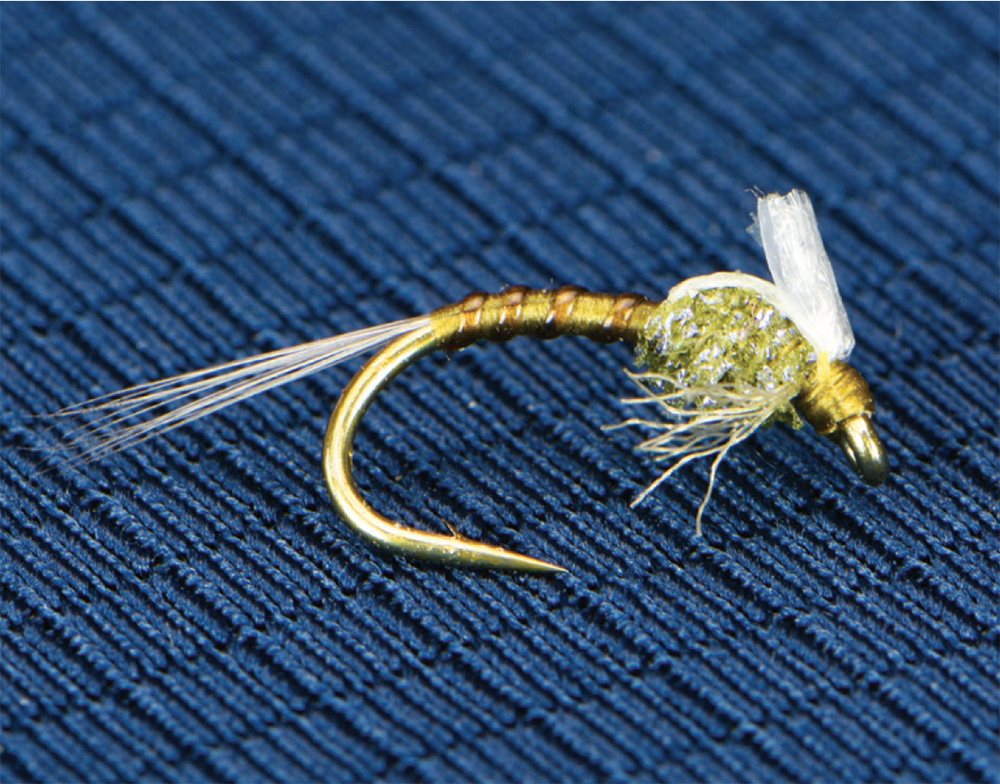
Graveyard Baetis
Hook: Tiemco TMC 2457, sizes 18 to 14.
Thread: Olive 8/0 (70 denier).
Tail: Dark dun rooster hackle fibers.
Abdomen: Tying thread.
Rib: Ultra Wire (brown).
Back: Graveyard Foam. (You may substitute with 0.5-millimeter electronics packing foam.)
Legs: Antron yarn (gray brown).
Thorax: UV Ice Dub (dark olive).
Where Are the Fish?
Without doing some research and exploring, most of the angling opportunities around Cody are out of sight, but there are two exceptions. The lower Shoshone River winds along the north edge of town before heading east across the Bighorn Basin.
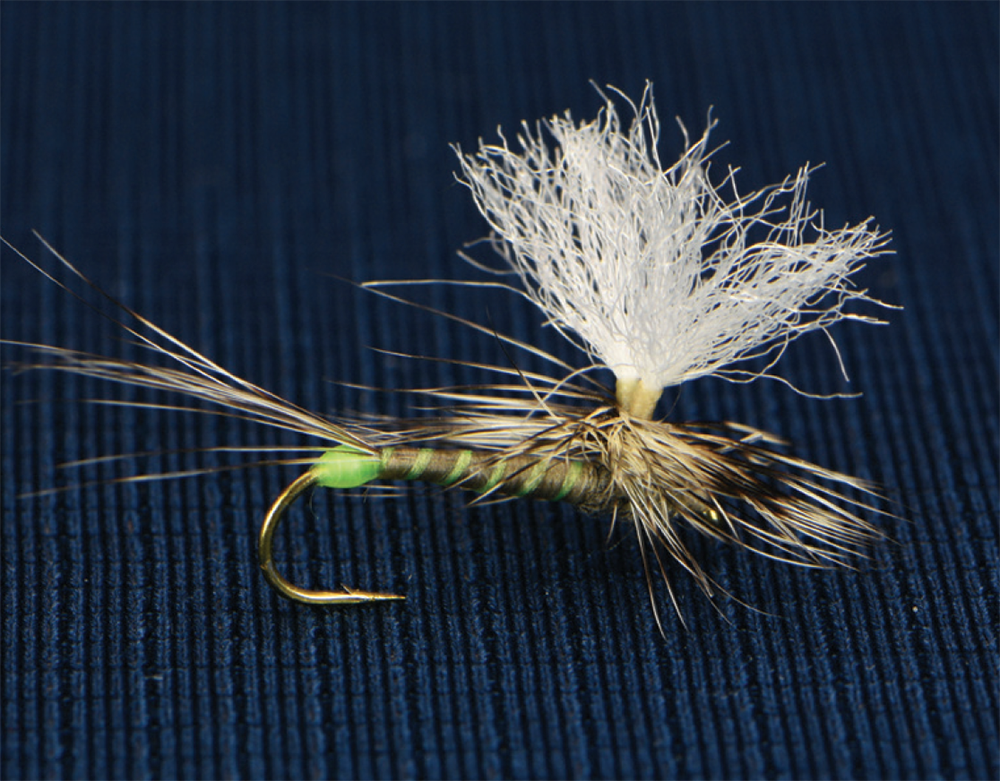
Hot-Spot Para Wulff
Hook: 2X-long dry hook, sizes 14 to 10.
Thread: Gray-brown 6/0 (140 denier).
Hot spot and rib: Fluorescent chartreuse 8/0 (70 denier) tying thread.
Post: Polypropylene yarn (white).
Tail: Grizzly rooster hackle fibers.
Abdomen: Tying thread.
Thorax: Dry fly dubbing (Adams gray).
Hackle: Grizzly.
The other easy-to-find destination is the North Fork of the Shoshone River, which roughly parallels state highway 14 to Yellowstone Park. This drive is spectacular, not only for the long, tempting glimpses of the mostly unoccupied river, but also for the towering hoodoos, snow-covered mountain vistas, the ever-present mule deer, and, in the fall and winter months, bighorn sheep and elk.
The crown jewel of the area is the North Fork River. This freestone stream offers some of the best trout fishing as well as diverse and prolific aquatic insect hatches. Throughout the fishing season, this river’s cutthroat, rainbow, cutbow, and brown trout eat everything from size 22 Blue-winged Olive imitations to size 2 plecoptera nymphs and dry flies. You’ll also find hatching gray drake, green drake, March brown, and mahogany mayflies.

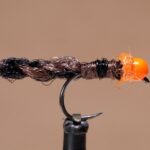
Beadhead Partridge Caddis
Hook: Tiemco TMC2457, sizes 18 to 14.
Bead: Gold brass.
Thread: Brown 6/0 (140 denier).
Tail: Antron yarn (copper).
Abdomen: Spectra Dubbing (tan).
Rib: Small silver wire.
Wing: Antron yarn (copper) and Swiss Straw (tan).
Hackle: Partridge.
Collar: Spectra Dubbing (peacock).
There are numerous species of stoneflies including Skwalas, yellow sallies, golden stones, little brown stones, and giant salmon flies. Shall I keep going? The North Fork is also known for its hatches of tan, brown, black, and October caddisflies, pale evening and pale morning duns, as well as a plethora of midges, grasshoppers, beetles, and ants. If an aquatic bug lives in this part of the country, it will pop up on the North Fork; you’ll have a hard time tying matching imitations for everything you might encounter on this terrific fishing destination!
There is, however, one problem: The fishing in the North Fork is seasonal.
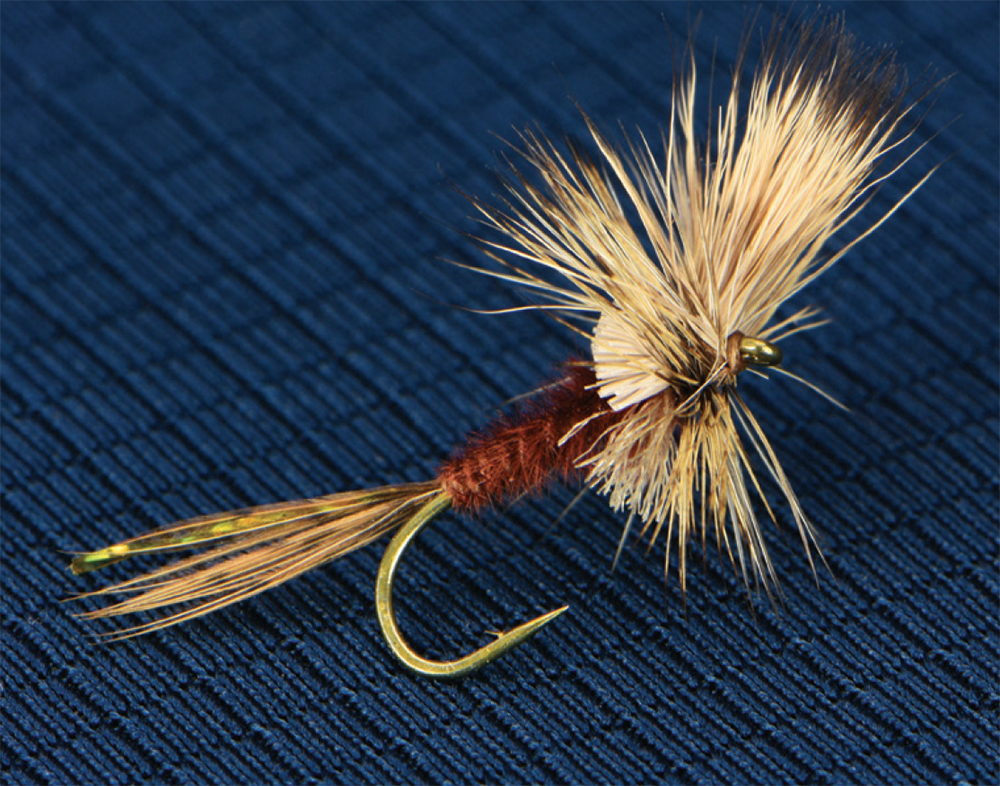
May Break Mahogany
Hook: Standard dry-fly hook, sizes 18 to 14.
Thread: Rusty brown 6/0 (140 denier).
Tail: Speckled brown Indian hen saddle fibers and Krystal Flash (root beer).
Abdomen: Rusty brown marabou barbs, twisted and ribbed with the tag end of the tying thread.
Thorax: Antron fibers (gray brown).
Wing: Natural deer hair.
Hackle: Rusty dun rooster.
The vast majority of the trout in the North Fork, including the native Yellowstone cutthroats and wild rainbows, are migratory. Due to the harsh conditions along the unobstructed river above Buffalo Bill Reservoir, these fish travel a good distance twice a year. Because this is a wild trout fishery, the river is closed to angling from April 1 to June 1 from Buffalo Bill Reservoir upstream to and including Newton Creek.

Red Humpy
Hook: Standard dry-fly hook, sizes 18 to 12.
Thread: Brown 8/0 (70 denier).
Tail: Moose hair.
Abdomen: Red floss.
Wing: White calf tail, split.
Back: Natural deer hair.
Hackle: Coachman brown rooster hackle.
Finding the best fishing also depends upon the weather. The cutthroat, rainbow, and cutbow trout move upriver starting in March, well before the usual May and June snow runoff. The more transient trout travel well into the wilderness, as far as 60 miles into the remote tributaries.
As autumn transitions into winter, the cutthroat and rainbow trout make their way back to the reservoir to find sanctuary. By late November, fewer cutthroat, rainbow, and hybrid trout are in the river, and by mid December they all take refuge in the depths of Buffalo Bill Reservoir. The brown trout, however, don’t follow this pattern.
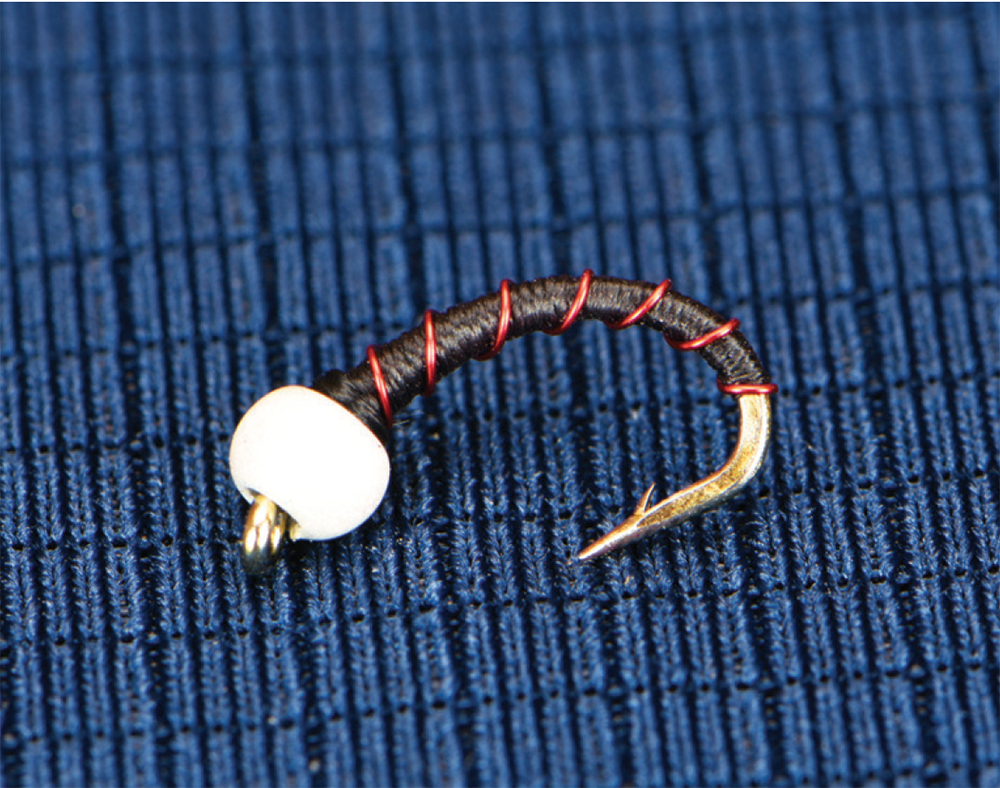
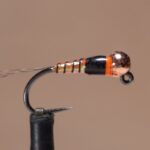
Ice Cream Cone
Hook: Tiemco TMC2487, sizes 20 to 14.
Bead: Brass (white pearl).
Body: Black 8/0 (70 denier) tying thread.
Rib: Extra-small red wire.
Unlike the cutthroat and rainbow trout, the majority of the brown trout reside in the river year-round. According to Tim Wade, owner, head guide, and fly-tying guru of North Fork Anglers, “We’re seeing more and more brown trout in the river all year.” Wade says they’re seeing healthy, well-fed 24-inch-long brown trout in the upper North Fork from March through December.

DQ Floating Damsel
Hook: Standard dry-fly hook, size 10.
Thread: Light olive 6/0 (140 denier).
Eyes: 1/8-inch foam cylinder (yellow).
Flash: Krystal Flash (olive pearl).
Tail: Golden olive marabou.
Abdomen: Golden olive marabou.
Back: 2-millimeter-thick foam (insect green).
Thorax: SLF Dave Whitlock Dubbing (damsel nymph olive).
Legs: CCT Fibers (olive).
Indicator: 2-millimeter-thick foam (yellow).
Access to the North Fork is spotty from the reservoir upstream to Wapiti, but this changes at the boundary of the Shoshone National Forest. There is roughly 30 miles of accessible river from the forest boundary to Pahaska Teepee Resort, where the main river turns north and enters the roadless wilderness.
Always keep in mind this is grizzly and black bear country! This point cannot be overemphasized. This is their land and we’re just visitors. Study and follow all recommendations for trekking through bear country: carry bear spray, make noise while hiking, and be aware of your surroundings at all times. If you’re not interested in occasionally looking over your shoulder while fishing, stay closer to town.
Read the entire article and see all the fly patterns in the Summer 2022 issue of Fly Tyer magazine.