Attractor patterns do not imitate natural foods; instead, they simply trigger an aggressive or curious response to the fly. The fly should not be subtle; the more a fish notices an attractor pattern, the better the odds it will draw a response. Size, flash, movement, and colors, such as bright orange, all make an attractor fly more noticeable to the fish.

Orange Asher
Hook: Standard dry fly hook, sizes 18 to 12.
Thread: Orange 8/0 (70 denier).
Hackle: Grizzly.
Body: Orange Sow-Scud Dubbing.
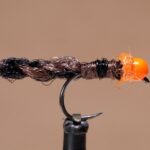
There are many orange attractor flies, including the orange Asher, orange Humpy, Chernobyl Ant, Partridge & Orange soft-hackle, the orange Copper John, and the orange Woolly Bugger. Many attractor flies use less orange and incorporate just a small amount of this color. Examples of these flies include the Flame, Stimulator, Egg-Sucking Leech, and a range of Euro-style nymphs such as the Frenchie that have collars of bright dubbing to create “target spots” on the flies.

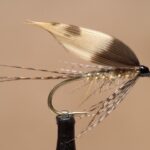
Partridge & Orange
Hook: Partridge L3AS Spider, sizes 16 to 12.
Thread: Cream 8/0 (70 denier).
Abdomen: Orange floss.
Rib: Gold wire.
Thorax: Hare’s-mask dubbing.
Collar: Gray Brahma hen or partridge hackle.
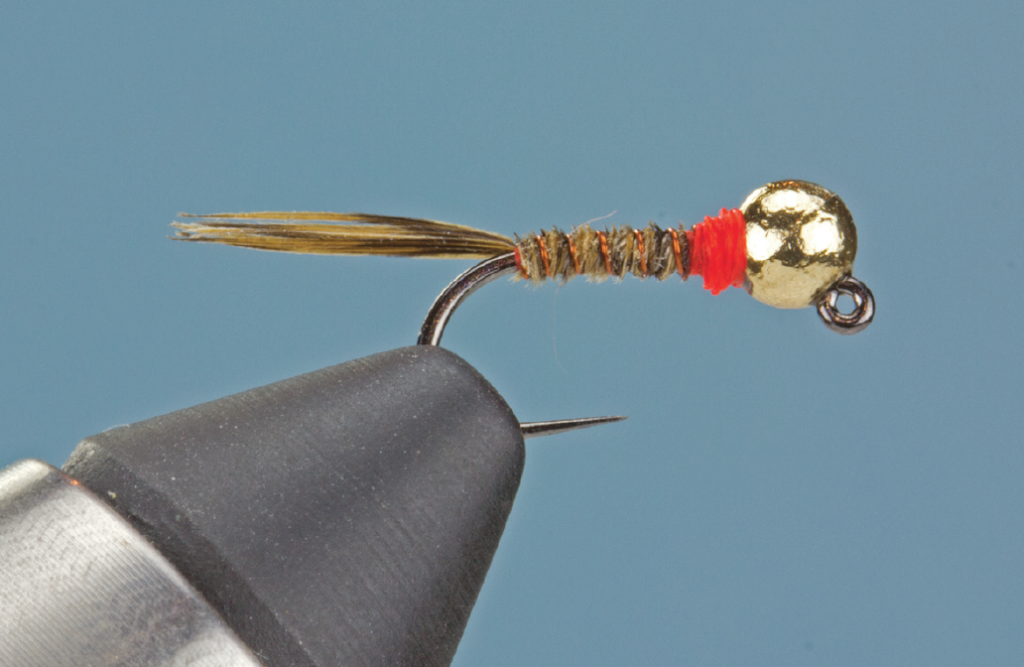
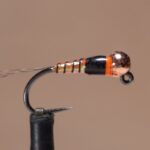
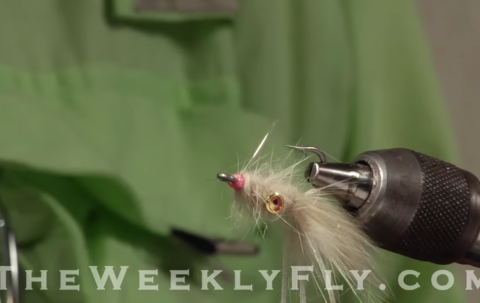
Frenchie
Hook: 60-degree jig hook, sizes 16 to 10.
Bead: Gold slotted tungsten bead.
Thread: Fluorescent fire orange 8/0 (70 denier).
Tail: Golden pheasant tail fibers.
Rib: Copper brown wire.
Body: Golden pheasant tail fibers.
Collar: Tying thread.
Match the Surrounding Color
I lean toward a theory, put forward by Gary LaFontaine, for selecting colors for attractor flies. Gary believed that flies incorporating the predominant ambient color of light of the surrounding area glow and are more visible to trout. It makes sense that if there is a great deal of orange light in the environment, a fly reflecting that spectrum of light will show up better than patterns tied using other colors.

Orange Heron
Hook: Tiemco TMC7999, sizes 8 to 1/0.
Thread: Fluorescent fire orange 8/0 (70 denier).
Tag: Gold tinsel.
Body: Orange floss and orange seal dubbing substitute.
Rib: Gold tinsel and Whiting Farms orange Spey hackle following the rib over the front half of the body.
Collar: Hot orange teal flank.
Wings: Orange saddle hackle.
Midday in the spring or early summer might be better a better time for using green or even bluish flies. Toward the end of summer and into fall, turn to yellow and brown patterns, but during sunrise and sunset, as well as in autumn when much of the surrounding vegetation reflects yellow, red, and orange light, break out the orange flies.
Fly fishing is usually a visual sport, and orange is quite visible to humans. Although we might depend on feeling fish strike our flies, especially when using streamers and nymphs, seeing these patterns is often critical to success. In the past 25 years, it has become increasingly common to use very small flies. These same flies are often drab in color and sparsely tied. When presented in shadows or during a heavy hatch, it might be all but impossible to see your flies.
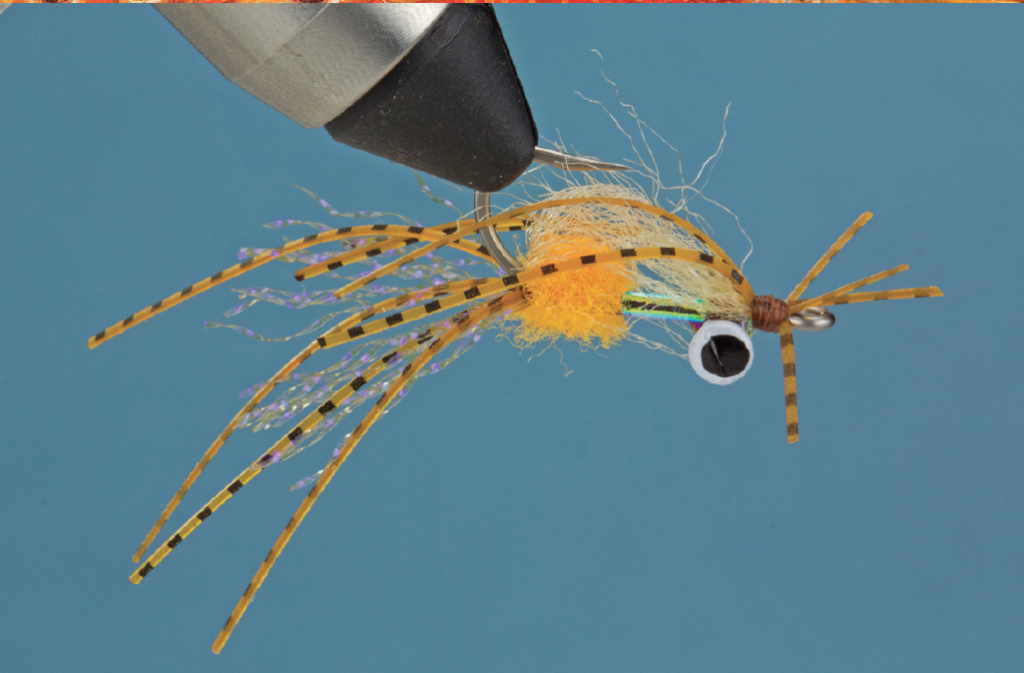
ARF Spawning Ghost
Hook: Tiemco TMC811S, sizes 8 to 4.
Thread: Tan 8/0 (70 denier).
Weight: Dumbbell.
Body veil: Tan Antron.
Tail: Tan UV Krystal Flash and four black barred tan silicone legs.
Egg sac: Orange egg yarn.
Body: Opal Mirage Tinsel.
Wing: Four black barred tan silicone legs.
Fly tyers often incorporate easy-to-see wing posts, shellbacks, or wings on their patterns. Depending upon the lighting conditions, orange is often a highly visible choice for these components. This principle may also apply to subsurface patterns. Incorporate orange in your larger nymphs and wet flies.
Perhaps there are no magical materials, but there are certainly ingredients that contain highly effective proper- ties. The color orange is one of those properties. Look through your fly boxes and see if you have any orange flies. If you do not, tie some!
Al Ritt is a leading fly designer and one hell of a nice guy. During the day, Al works at Peak Engineering, the manufacturer of the Peak Vise. Al also hosts trips at some of the premier fly fishing destinations around the world. To learn more, check out his website, www.alrittflies.com.