Striped bass prefer water temperatures from 48 to 62.5 degrees Fahrenheit, and it is critical for fishermen to understand the importance of the low and highs end of this range.
Decent fishing generally begins when the water temperature reaches 48 degrees. The bass, which remained fairly dormant throughout the winter, are now on the prowl for food. As water temperatures rise from 48 to 58 degrees, striped bass will increase their feeding activity, and at the upper end of this range, provided there is sufficient bait, you might encounter good activity near or on the surface. I have fished Cape Cod’s extensive flats and seen schools of hundreds of striped bass feasting on baby sand eels in less than three feet of water. When the mackerel arrive in those same waters, both the bait and bass get larger, and it is not uncommon to catch striped bass measuring in excess of 40 inches long during this time of the season. A boat is not necessary for this fishing, but using a kayak, as well as stalking the flats, can yield exciting fishing.
When the water temperature is in the low 60s, striped bass are generally in spawning mode. Many of the fish move into the Hudson and Susquehanna Rivers, and many other rivers also have populations of spawning bass. The best fishing is right before the bass spawn; after spawning, the fish quickly leave the rivers and head back to the local bays and estuaries.
Striped bass remain in those waters until the temperatures go above 68 degrees Fahrenheit. When that occurs, both the baitfish and bass start migrating again, and you might see the same intense feeding that comes in the fall.
As the bass move north toward their summer holding areas—the waters around Cape Cod, Massachusetts’s North Shore, New Hampshire, and Maine—the schools of fish often grow in size. When chasing striped bass during the early part of the season, it is important to check water temperatures to locate the fish. Several websites offer real-time water-temperature data. One convenient website is www.seatemperature.org. Bookmark this site and check it often, and you’ll have a pretty good idea of where the fish are at all times.
The Author’s Fly Selection
In the late spring and early summer, the majority of the bait is small; the only exception is large adult menhaden, which are sometimes called bunker or pogies. These large baitfish are best imitated using big flies, and fishing them generally requires a boat. During this time of the season, adult menhaden are usually in deeper water. The majority of early-season fly fishing for striped bass is done with smaller flies.
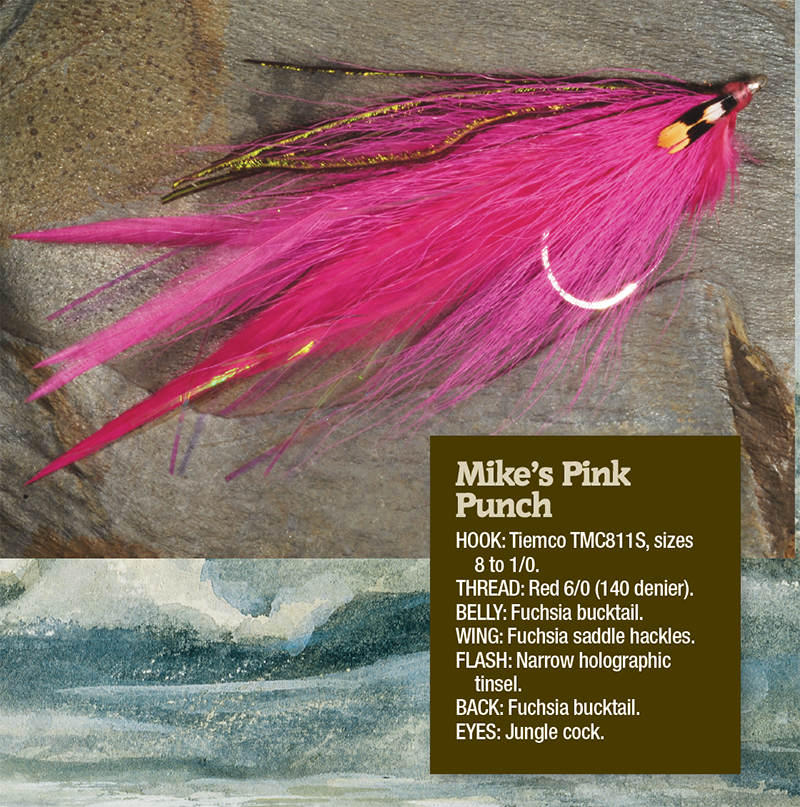
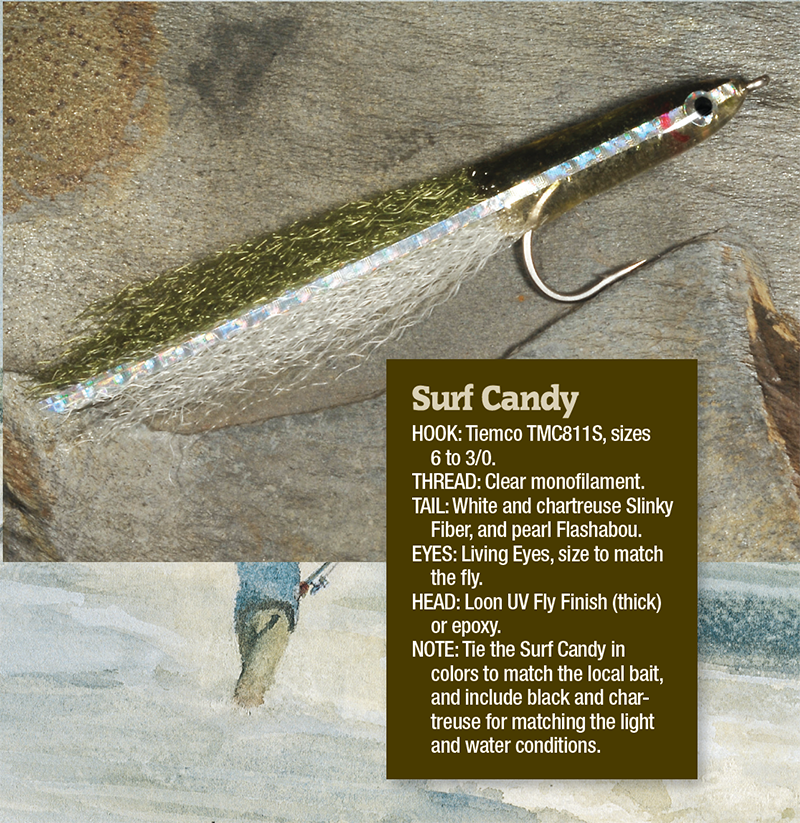
The majority of the baitfish during this time of the season have slim profiles. Imitate these baitfish, including rainfish and sand eels, using small, slim patterns such as Clouser Minnows, Jiggys, and a host of local patterns.

Length is the second factor in fly selection. In the early season, the majority of baitfish within range of shorebound anglers is small. Many baitfish swimming in the path of the early-summer striped bass migration are juveniles. These baitfish can be as small as one inch long, but the majority are between two and four inches long. Tie flies in these lengths.
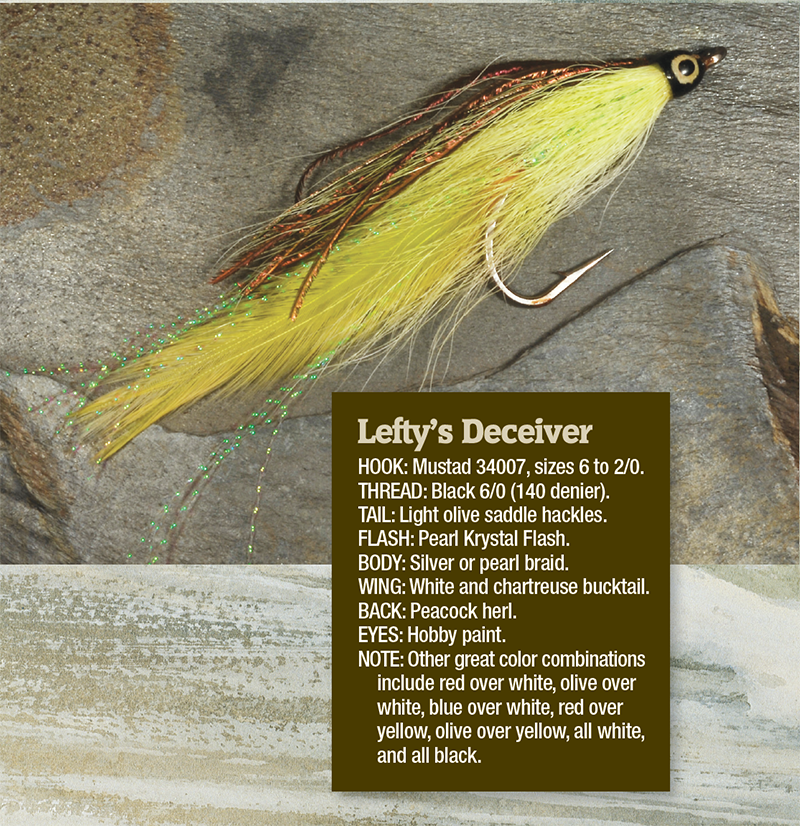
The color of the fly mostly depends upon what time of the day you are on the water. Black flies are great when fishing early in the morning before sunrise or in the dark, especially during a new moon or the week before and after a new moon when it is especially dark. During a bright full moon, white is an excellent choice because the extra light enables the fish to see your fly more easily than a black pattern.
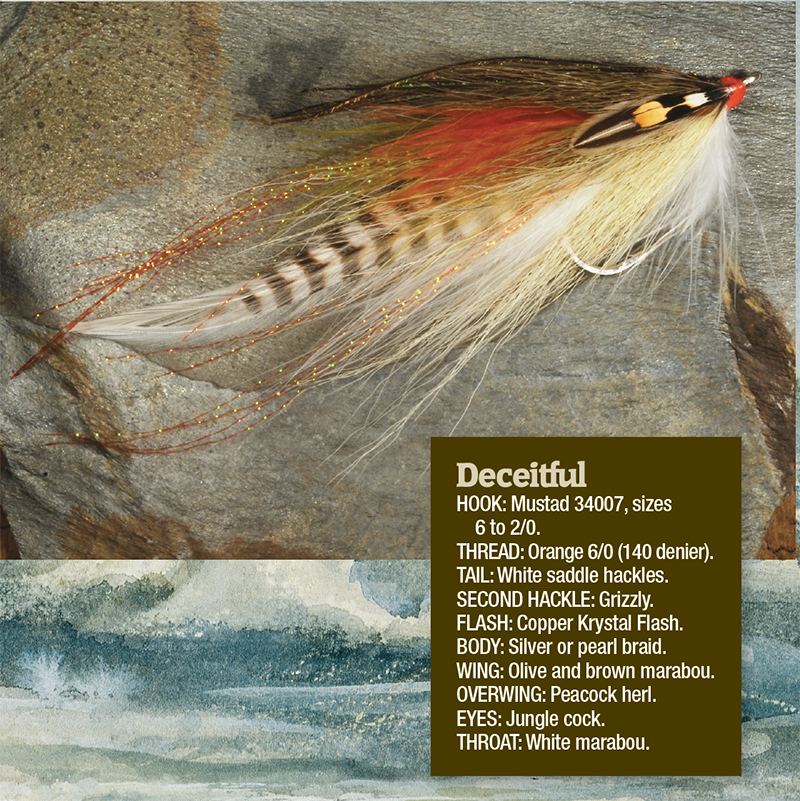
When fishing during the morning, chartreuse is the color choice. As the sun progresses and gets higher in the sky, I often switch to pink, light brown, or tan flies.
The depth of the water can also come into play when selecting colors. When fishing in water greater than 10 feet deep, chartreuse or fluorescent yellow are tough to beat. A saltwater fish is able to see green/chartreuse and colors on that end of the color spectrum extremely well.
When fishing dirty water in the spring, I have a saying: “There are two colors to choose from—chartreuse and black.” This is very similar to fly fishing for trout in dirty water: a black fly is very visible to the fish. I mentioned chartreuse when fishing in these conditions because saltwater fish have a propensity for seeing colors on the green end of the color spectrum, including chartreuse.
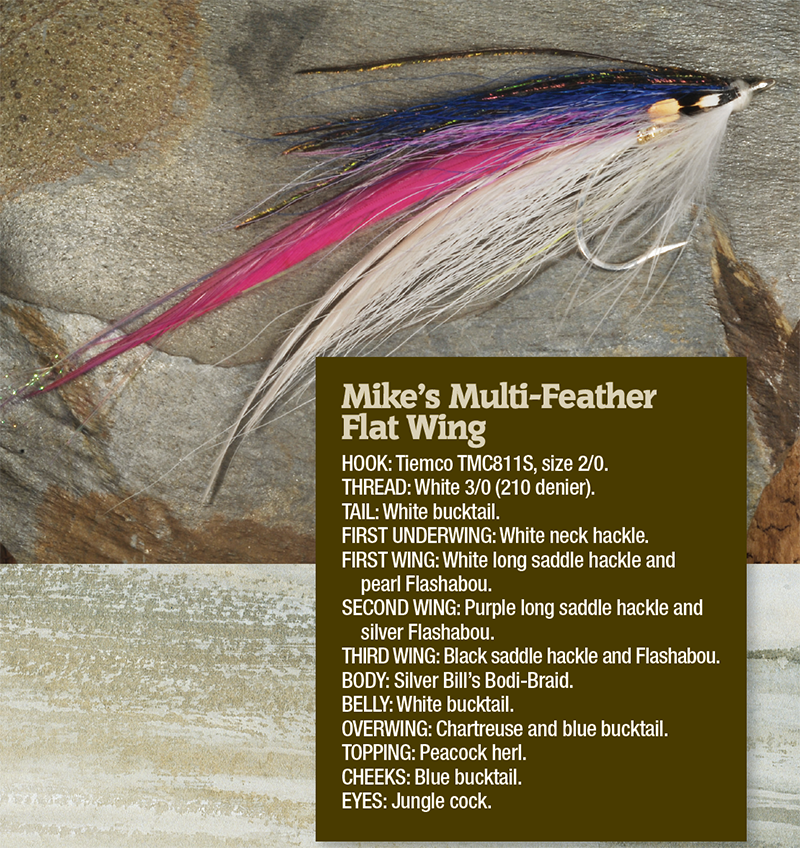
Following these guidelines when fishing for striped bass in the late spring and early summer will result in more fish on the end of your line. Using geography, currents, and water temperature will help locate the fish. When those three criteria are met, keep your selection of flies simple and you will enjoy fast action.