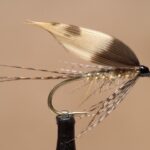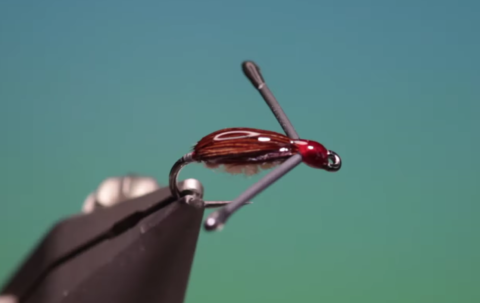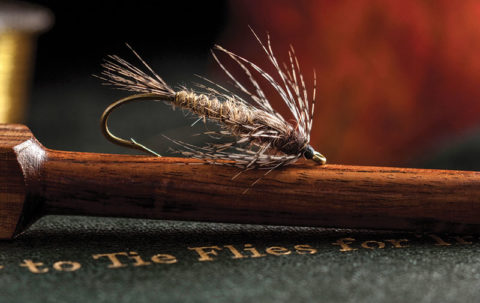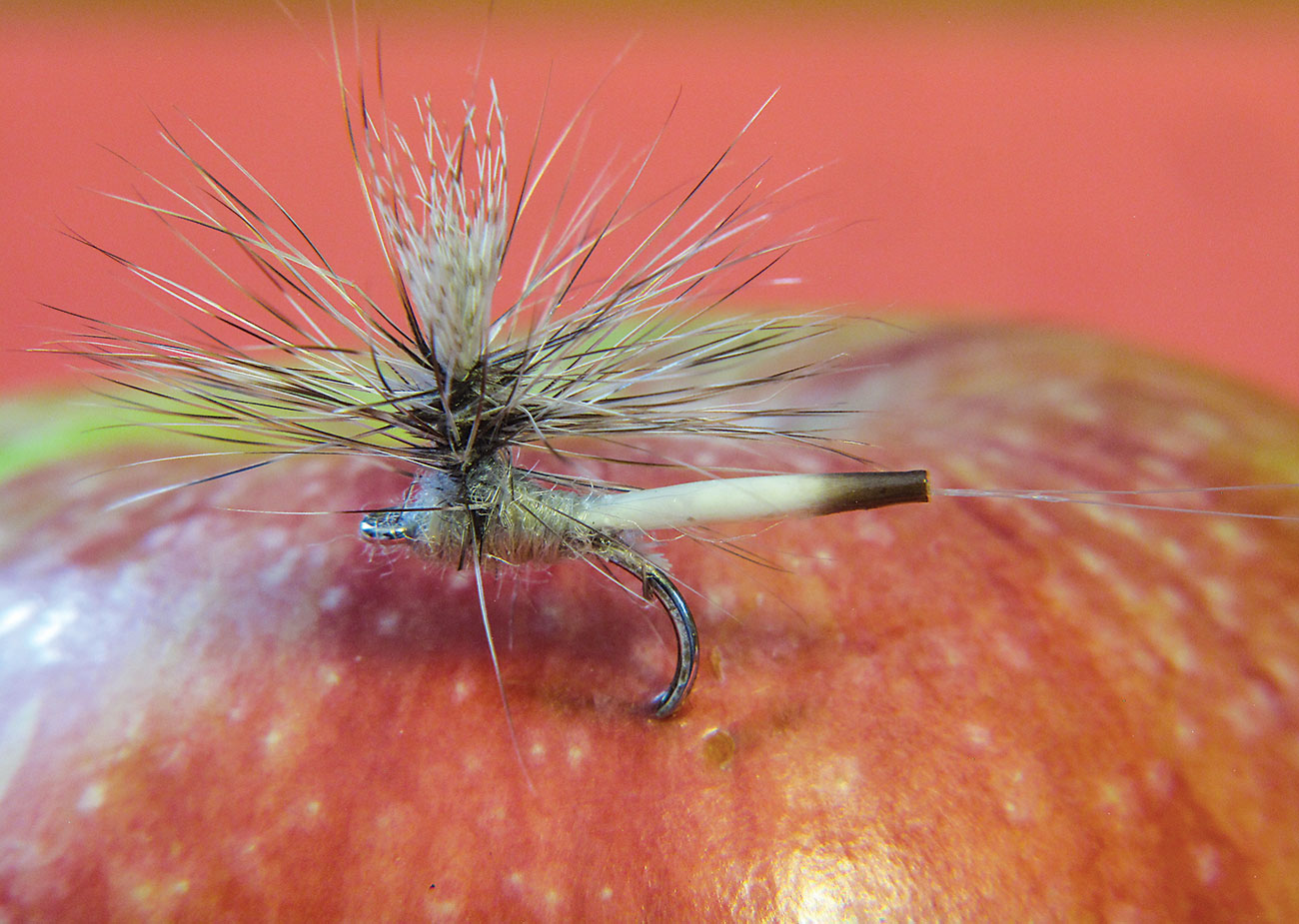
Tie this quill version on short-shank and scud hooks in sizes 20 to 16. I prefer scud hooks because they weigh less. Callibaetis naturals diminish in size as the season progresses, but don’t rush to your smallest pattern; I have no trouble getting strikes on flies that are at least one size larger than the naturals. I’ve even had hits when the hatch was essentially over and I could see no naturals on the water; I suspect that the sporadic hatches I encountered faded slowly and the trout were still prepared to accept the naturals—and their imitations.
The porcupine quill extended body is the key ingredient in this pattern. Porcupine quills are rarely available from fly tying supply houses. I’ve harvested my supply from road-kill, but you can find quills listed on E-bay and jewelry making websites. Be sure to purchase American—not African—porcupine quills; the later are too large for tying this fly.
PORCUPINE-QUILL CALLIBAETIS
Hook: Short-shank dry fly or scud hook, sizes 20 to 16.
Thread: Gray 8/0 (70 denier).
Tails: Moose mane hair, Microfibbets, or Mayfly Tails.
Extended body (abdomen): American porcupine quill.
Thorax: Gray dubbing.
Wing post: Mallard flank feather.
Hackle: Grizzly.
Making the Extended Abdomen
Tie the Porcupine-Quill Callibaetis
Helpful Tying Tips
Making the porcupine quill extended-body dry fly is relatively simple. I suggest preparing a number of extensions before tying the flies. First, select your quills. Even American porcupine quills vary in thickness and length, but you will be cutting the quill, so length is immaterial. As for thickness, avoid both the thinnest and the thickest quills.
Snip off a small bit of the “pricker” end of the quill; that’s the black, shaded part. Remove the last one-quarter to one-third of the tip. Next, cut the remaining quill in half. You can shorten the extended quill body to its final length just before attaching it to the hook.
You must ream the quill before using it. Do this using a fine sewing needle or straight piece of copper wire as a reamer. Be sure the wire goes straight through the quill or you will pierce the side. Push the reamer into the larger end of the quill and continue until it exits the smaller black-tipped opening. Use a slow, back-and-forth motion as you work. It’s not necessary to remove all the contents from the quill, but there’s not much there; you’re simply clearing a path for the tails.
Callibaetis duns and spinners have two tails. Your imitation can have more tails, but two will suffice. I started using moose mane hair for tails but switched to Microfibbets. (A product called Mayfly Tails are a fine substitute for Microfibbets.) The color of the tail doesn’t seem to matter; moose mane hairs are black, but now I use blue dun Microfibbets. I like the appearance of the finished tail but haven’t noticed that the color makes any difference in the effectiveness of the fly.
Moisten the butt ends of the hairs or Microfibbets before inserting them into the quill; this holds them together when threading them into the larger end of the extended body. Push the tail forward until it protrudes from the other end of the quill. The length of the tail is not critical, but remember that the tails on Callibaetis naturals are longer than on many other mayflies. Once the tail is in position, place a tiny drop of superglue at each end of the quill. Spread the individual hairs before the glue dries, but be careful or you might accidentally pull one of the fibers out of positon. The fly will balance well on the water and be just as effective in attracting fish whether or not the tails are forked. Now you can tie the fly!
That’s all there is to it. When the extended body breaks off, as it eventually will, you can tie another to the hook and conceal the new thread wraps with a pinch of dubbing. I have had extensions last through five trout before retiring a fly; a more careful angler with agile fingers could probably land even more fish using the same fly. But this pattern is easy and fun to tie, so when trout are very especially picky, I’m content with even one fish per fly; durability is a variable concept to me.
Mark Halperin is a talented fly designer who takes great care when creating new patterns. He is a regular contributor to our magazine. Mark lives in Washington State.