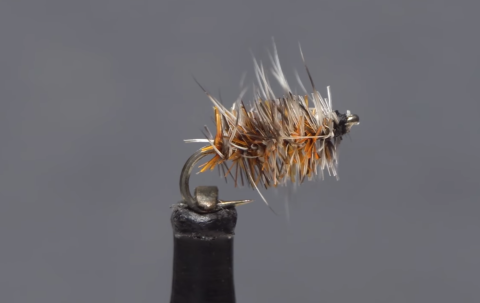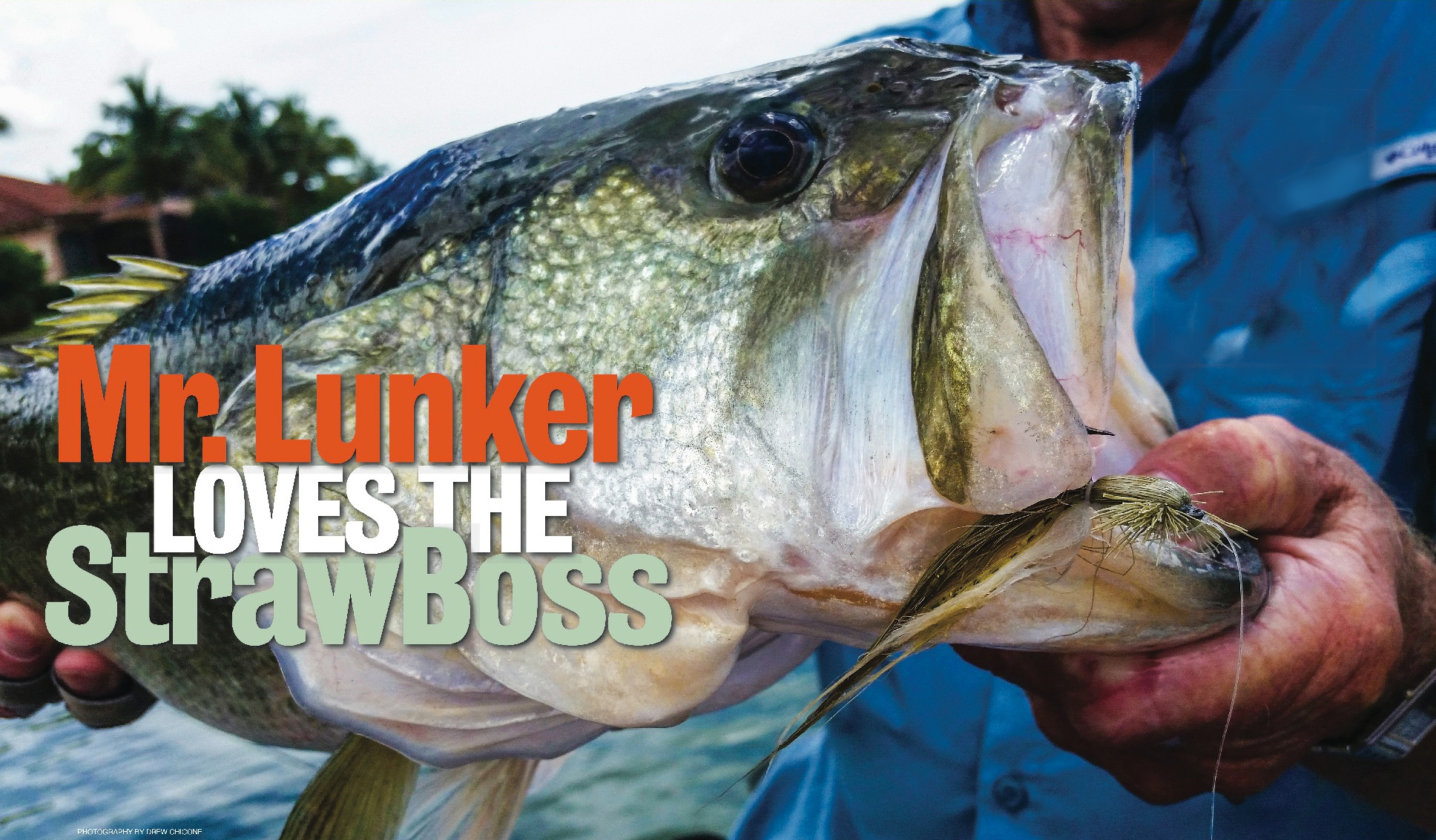
Recommendations for Fishing the StrawBoss
When fishing drop-offs, strip the fly to the edge and let it fall. Try waiting for a count of 10 or longer, keeping the line tight and watching for a strike. Frequently, on the first strip, you will feel the resistance of a bass.
“The StrawBoss is best fished at a very casual pace,” Joe says. “While many strikes occur on the fall, the fly also has a distinctive motion when stripped. Because the weight is distributed laterally and concentrated in the center of the shank, the StrawBoss tends to gently toggle back and forth, giving it a lifelike swimming motion. Inching the fly along using quick micro-strips, using only your thumb and index finger, is a great way to entice larger, more educated fish.
Finishing the StrawBoss
“When fishing sandy or mud bottoms, I let the fly settle to the bottom before making a quick strip to kick up dust,” says Mahler. “The combination of the weighted belly and the outstretched wings will make quite a cloud.”
The StrawBoss is not a good recommendation if you are looking for something quick to tie. Even for an experienced tier, making Mahler’s StrawBoss requires a significant commitment of time. But if you devote the time and a little extra care, you might just find a new boss for your bass fly box.
Drew Chicone is a regular contributor to our magazine. He usually writes about saltwater flies, but he and his partner, Joe Mahler, love casting flies to all species of fish. They also have a business called Strip Strike University, which is dedicated to teaching fly fishing and tying. To learn more, check out www.stripstrikeuniversity.com.