by David Klausmeyer
We often think of steelhead flies as a separate school of fly tying, but maybe that’s just an Eastern prejudice.
The authors who write for this magazine are the most connected anglers in fly fishing. In addition to spending hundreds of hours at the vise and on the water, they attend fly fishing and tying shows across the United States and around the world. If it is a major event, I can bet you a fly box full of flies that at least one of our authors will be attending and probably tying.
In a recent conversation with longtime contributor Al Beatty, we discussed candidates for profiles in this magazine. I live in Maine, and Al lives in Idaho. I was in Idaho many years ago, but not since then; I don’t think Al and his wife, Gretchen, have ever visited my state. We are bound by fly tying but live a continent apart.
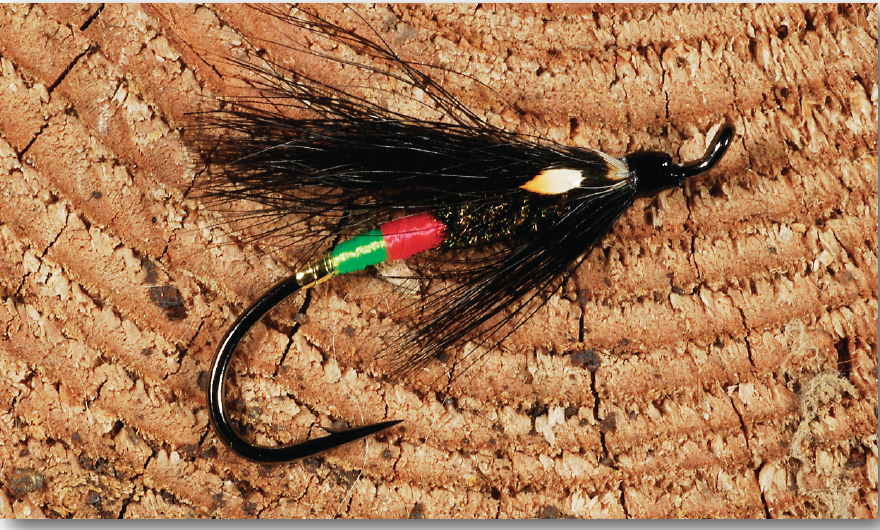
Undertaker
Hook: Your choice of salmon hook.
Thread: Black 8/0 (70 denier).
Tag: Fine flat gold tinsel, fluorescent green floss, and fluorescent red floss.
Body: Peacock herl.
Rib: Oval gold tinsel.
Wing: Black bear hair.
Throat: Black hackle wound as a collar and pulled down.
Cheeks: Jungle cock.
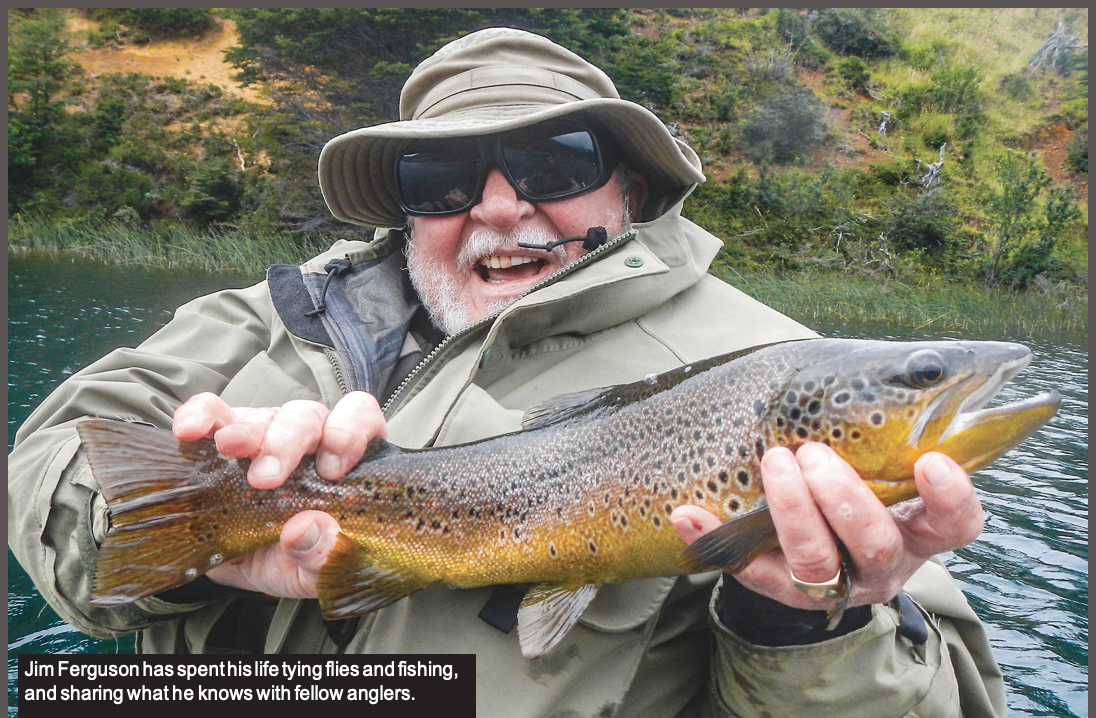
There are a couple of criteria when selecting someone to profile in this section of the magazine. First, of course, the tier must be able to make good flies; that’s obvious. We also like people who willingly share their knowledge and eagerly help others learn how to tie and fish. It is also very important that the person be friendly because I don’t want you to read about someone, and then meet him and discover that he’s a jerk. (I won’t mention the name, but I did interview one big-name tier who, as I sadly discovered, was such a snot that I wouldn’t stop to help him change a flat tire. He wasn’t profiled in this magazine.)
And finally, although we occasionally feature well-known tiers who have national reputations, for the most part we do not. We like using this section of the magazine to shine the light on talented tiers you probably do not know. It’s a nice way to share some worthy praise, and you get to learn about a tier whom you might never know.
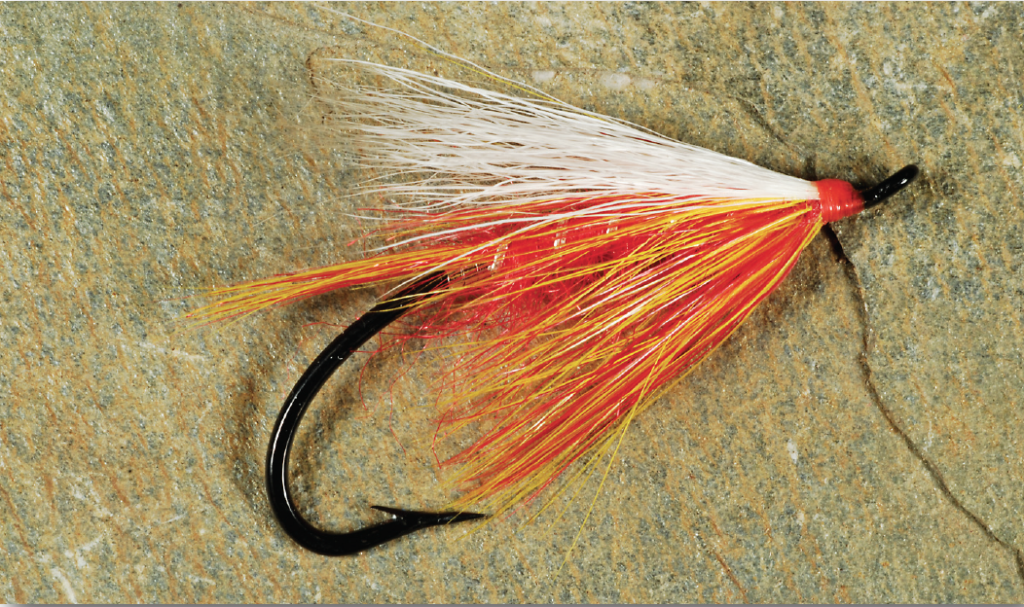
Skykomish Sunrise
Hook: Your choice of salmon hook.
Thread: Red 8/0 (70 denier).
Tip: Silver tinsel.
Tail: Red and yellow hackle fibers.
Body: Red wool or seal dubbing substitute.
Rib: Silver oval or flat tinsel.
Throat: Red and yellow hackle wound together.
Wing: White calftail or bucktail.
“Who, from your part of the country, should I include?” I asked Al. “I am especially eager to feature someone who ties steelhead flies.”
“I can think of several excellent tiers,” he replied, “but if you want a steelhead tier, you should talk with Jim Ferguson. I’ve known him for years. He’s a great guy, and he makes terrific flies.”
I had never heard of Jim Ferguson, but I do know Al and I trust his judgment. It turned out that his recommendation was brilliant.
When East Meets West
In a sense, Jim Ferguson’s story is a tale of East meets West. Although he was born in Lancaster, Pennsylvania (East), his family moved to Oregon when he was a very small boy (West). And although he is an expert at tying flies that catch Pacific steelhead and salmon (West), many of his favorite patterns are based on Atlantic salmon flies (East).
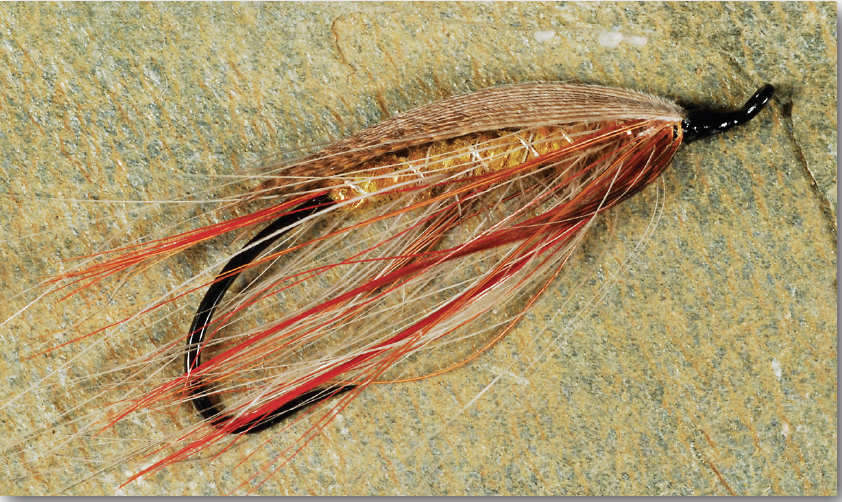
Lady Caroline
Hook: Traditional low-water salmon or Bartleet-style Spey hook.
Thread: Black 8/0 (70 denier).
Tail: Golden pheasant breast feather fibers.
Body: Blended seal fur substitute, one part olive green and two parts light brown.
Ribs: Flat gold tinsel followed by fine oval silver tinsel. Counter-wrap fine gold wire over the body hackle.
Hackle: Natural blue-eared pheasant.
Throat: Golden pheasant breast feather.
Wing: Bronze mallard strips tied flat over the back.
“When I was living in Portland—I was about eight years old at the time—I had a newspaper route,” he said when describing how he started tying flies. “The distributor of the newspaper was a fly fisherman, and he was teaching his son how to fish. They asked if I wanted to try, so we started casting in his backyard. I was always good at making models, so one day his son walked up to me with a little red box. He said he talked it over with his dad, and they decided I should have his fly tying kit. He was all thumbs, and said that if I tied the flies, they would take me fishing.”
While it’s possible to learn to make flies without the help of another tier, that rarely happens. Sure, many of us learned to tie from reading books—this was before videos and Fly Tyer magazine—but good instruction flattens the learning curve and speeds up the process. Jim had a particularly interesting instructor.
“I went to the local department store, where a woman named Audrey Joy tied flies on a sewing machine,” he said. “Polly Rosborough used to tie there, but when he quit, Audrey took over. She did her own style of tying the pattern called the Juicy Bug, which I sent to you. She had very long fingernails, and she used them to push the jungle cock up against the wings. She made that a real popular pattern.”
She tied that type of fly on a sewing machine?
“Yes, she did. Her husband converted an old treadle sewing machine for tying flies. That’s how some commercial tiers did it. And she was left-handed, so I would stand in front of her and watch her tie, and her flies looked like they were in my vise. And I got patterns from her. There were times she would say she couldn’t talk because she had to fill an order, but when she was done, she would tell you how she made them. I was copying down all kinds of patterns. She was receiving flies from all over the country for custom orders, and I copied a lot of them down.
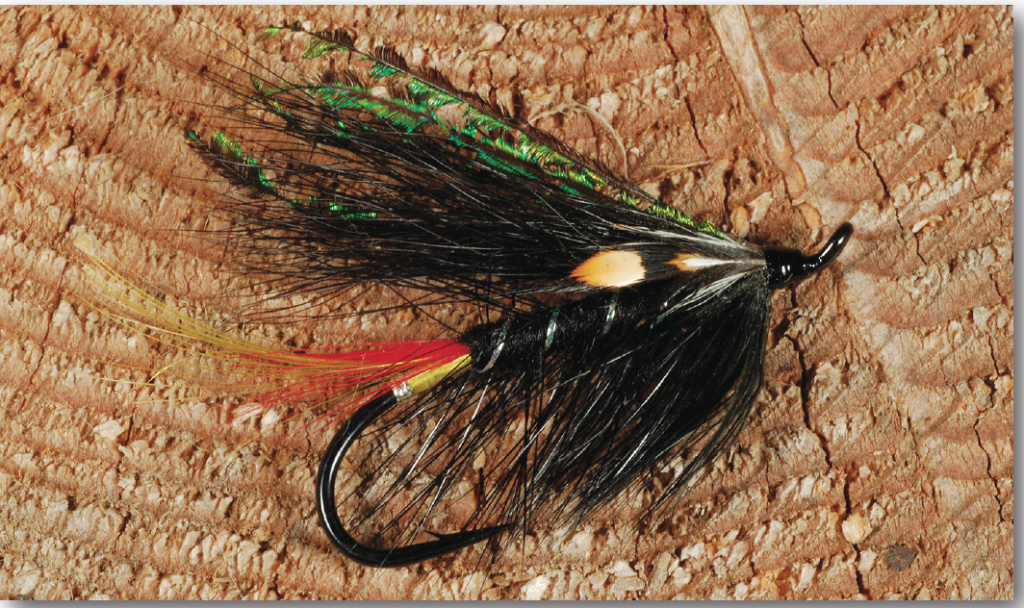
Black Dose Hair Wing
Hook: Your choice of salmon hook.
Thread: Black 8/0 (70 denier).
Tip: Silver oval tinsel.
Tag: Yellow silk.
Tail: Golden pheasant crest veiled with red hackle fibers.
Body: Black wool or seal dubbing substitute.
Rib: Silver oval tinsel and black hackle.
Wing: Black squirrel or fine black bear and about four strands of peacock sword.
Collar: Black hackle.
Cheeks: Jungle cock.
“When I first started tying, other than watching Audrey Joy, I didn’t have any instruction. A local fly shop had a mimeographed list of patterns, but there were no photos of the flies; it was up to you to figure out what the finished flies should look like. The old Helen Shaw books were great, but they were in black-and-white. Today, there are a lot of great resources to help a new tier get started.”
Have you always tied steelhead flies? “Yes, I’ve been tying steelhead flies almost from the beginning.” Do you fish for steelhead? “Yes, I fish for steelhead, but today I probably fish more for trout. I do tie more steelhead flies. I especially did a lot of steelhead fishing when I lived on the Deschutes River.”
Eastern Salmon Flies for Western Steelhead
Although Jim’s fly box contained several big and bright patterns that we would associate with steelhead fishing, he also sent a large selection of Atlantic salmon flies. Jim said that a lot of steelhead anglers use Eastern salmon patterns. “I’m a member of the Northwest Atlantic Salmon Fly Guild. In addition to loving to tie classic salmon flies, a lot of those folks have adapted Atlantic salmon patterns for fishing for steelhead. For example, you can tie a Green Highlander as a hair-wing pattern for steelhead. That’s just one example. The Blue Charm and Green Butt Black Bear are also great flies for catching both Atlantic salmon and steelhead. The Blue Charm is a popular pattern on the Deschutes.”

Moonlight Dee Fly
Hook: Your choice of salmon hook.
Thread: Black 8/0 (70 denier).
Tip: Flat silver tinsel.
Tail: Golden pheasant crest and jungle cock.
Body: Flat silver tinsel veiled above and below by two pairs of chatterer feathers or a substitute, and black silk.
Ribs: Fine oval silver tinsel over the silver half of the body, and broader oval gold tinsel over the front half.
Hackle: Black heron or a substitute such as black blue-eared pheasant spiral-wrapped over the front half of the body.
Throat: Speckled gallina or a substitute.
Wing: Cinnamon turkey tail tied flat.
When I opened your fly box, I was surprised to find a General Practitioner, which is a classic Atlantic salmon prawn imitation.
“The General Practitioner is probably my favorite fly, as well as the Black Dog; that’s another Atlantic salmon pattern.
In addition to his large fly box brimming with beautifully tied patterns, as a gag, Jim sent a wooden box that looked like a miniature coffin. It contained 10 Undertakers.
The Undertaker is one of the most popular contemporary salmon flies. Warren Duncan, the great tier from New Brunswick, Canada, wrote about this pattern for this magazine in the late 1970s. He was a great friend, and he is sorely missed on his native salmon rivers. His famous fly, however, lives on in New Brunswick as well as on West Coast steelhead rivers.

Maxwell’s Hot-butt Purple Matuka
Hook: Your choice of salmon hook.
Thread: Black 8/0 (70 denier).
Tip: Flat silver tinsel.
Tag: Hot red silk or floss.
Body: Purple SLF dubbing or seal dubbing substitute.
Tail and wing: Purple hackles.
Rib: Flat silver tinsel.
Collar: Purple hackle.
“We found that fly in Dick Stewart’s book titled Atlantic Salmon Flies,” Jim said. “It had a lot of patterns that we could use for steelhead. There was another pattern called the Freight Train, and another called the Signal Light; they use that sort of red and green coloration on the rear. I started tying the Undertaker because I got hold of some very good black bear hair for the wing.”
I pointed out that there seems to be two schools of thought about steelhead flies: the smaller classically inspired patterns, and larger and flashier flies. “Yes, a lot of young tiers make very big and bright patterns. And a lot of tiers are moving toward what is called the Intruder style of flies, and some make tandem-hook flies. I learned a tandem fly from Audrey Joy called the Atom Bomb. She made it, however, with the hook points on the same side of the fly. She did this because if you hook a fish in both the top and bottom jaws, and then you lose the fish, it would die because its mouth would be sewn shut by the fly.
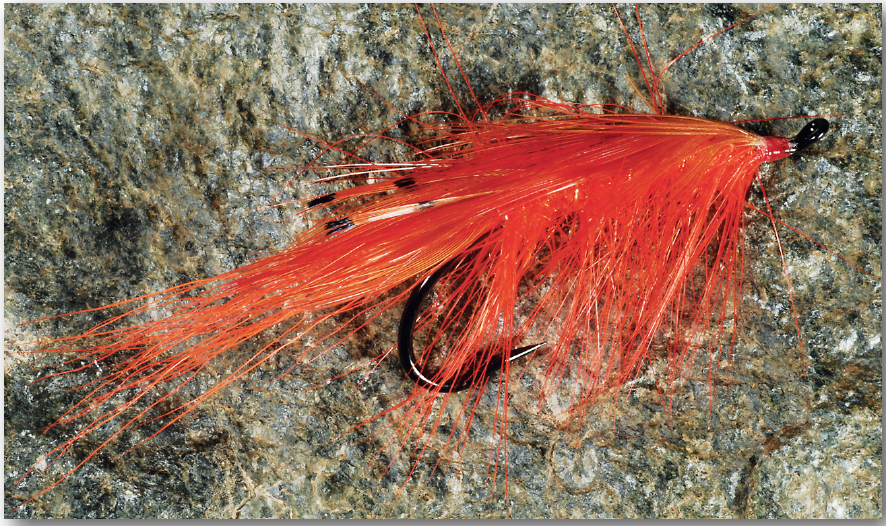
General Practitioner
Hook: Your choice of salmon hook.
Thread: Red 8/0 (70 denier).
Tail: Orange bucktail and a golden pheasant breast feather.
Rib: Oval gold tinsel.
Body: Orange seal fur or a substitute.
Hackle: Orange saddle hackle.
Eyes: Golden pheasant tippet.
Wing: Two golden pheasant breast feathers tied flat.
“The Intruder patterns and tube flies are very flashy. I like tube flies because you can use short-shank hooks. With a long-shank hook, the fish has a lever to work against you and it can throw the hook. This isn’t a problem with the short-shank hooks used with tube flies.
This really was a story of East meets West. I have caught a lot of Atlantic salmon, and I even served as president of an Atlantic salmon fishing club; I have fished for steelhead only once. Jim has spent his entire fly fishing life tying patterns for catching steelhead; he has never fished for Atlantic salmon. Regardless of where we fish, it turns out we use pretty much the same flies. And it took a man living in Idaho to bring us together. Fly tying remains the common language.