Lars and the Kvennan Special
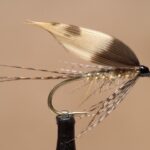
Lars, one of those Swedish anglers, fished with very heavy nymphs. He was the only one who fished below the surface, and he did so with considerable success. I was eager to learn and had some interesting discussions with him. Lars called his fly the Kvennan Special. He named it for a camping place he had stayed and fished for more than 15 years. Compared to Lars, I was just a rookie.
One evening, after a bitterly cold and rainy day when dry flies hadn’t been nearly so successful for me as usual, Lars invited me to his caravan and we exchanged some patterns. He also gave me an excellent tying demonstration for several of his flies. I still regret that I did not make proper notes, because I know that many anglers would have found my Swedish friend’s marvelous patterns most interesting.
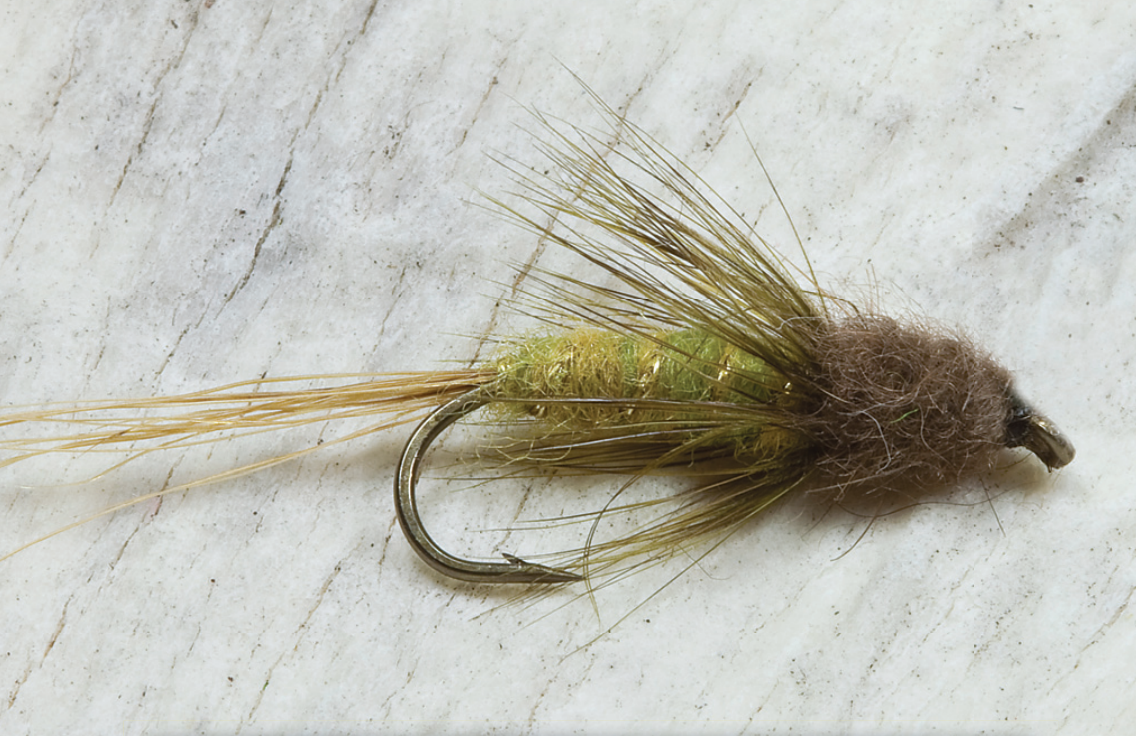
The Kvennan Special
Lars was a good teacher, his techniques were simple and effective, and with his help I caught a good number of fish below the surface. I tried copying his patterns, and after a few attempts, I created a reasonable one. I showed my version of the Kvennan Nymph to Lars, and he was very complimentary even though I thought the pattern wasn’t all that good. I had been tying flies for only a few years, but his help instilled confidence in me and was probably instrumental in the development of the nymphs I tie today. The Kvennan Special is still one of my old favorites, but more important, it gave me the idea for a very successful series of patterns I have since developed.
I tied my first weighted nymphs the following winter. I weighted them with layers of lead wire. The materials Lars used for his pattern were not available in Holland, but I managed to tie acceptable imitations using rabbit fur dubbing for the bodies and partridge feathers for the tails. I called my first nymph Lars’s Grayling Bug, and it worked quite well.
Making the Fly Even Better
After a year of experimenting with my variation of the Kvennan Special, I tried making improvements to the fly. Sadly while I tried my copies at those fishing spots in Norway, Lars and his friends didn’t show up due to tragic family reasons, so I had to experiment by myself. My priority was still dry fly fishing; I played with nymphs only when floating patterns weren’t successful, which happened mainly in periods of cold or during bad weather.
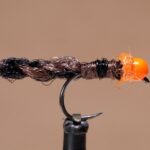
I think it was in 1982 when I started omitting the tail from the fly and moved the body hackle much closer to the hook bend. I kept a smaller tag in the same color as the original pattern, but it was not long before also I experimented with tag color variations. The partridge feather fibers I used produced a nice long tail and added a lot of movement to the fly, and I found them better than the wild pig hair that Lars used in his nymph; I still consider this one of the best improvements in my development of my nymphs. Many people do not believe you can catch grayling with a fly that has a tail that is almost three centimeters long, but I can assure you that I was catching more fish than ever before. I called this latest improvement “the Lost Caddis” because it seemed like a reasonable imitation of a cased caddis larva emerging from the stones and weeds.
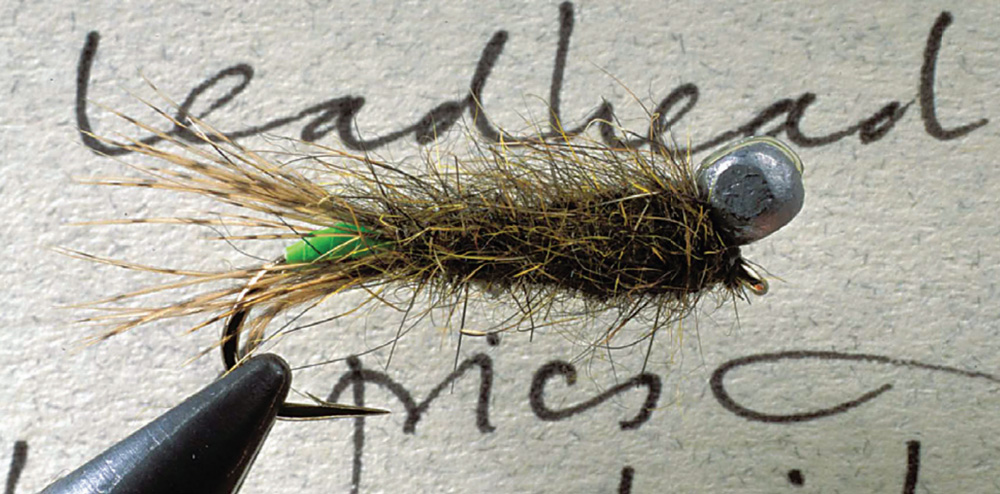
I weighted my version of Lars’s Grayling Bug and the Lost Caddis using lead wire, but switched to split shot in 1984 when I ran out of wire; my only option was to place a piece of shot on the hook shank just behind the eye. That was the birth of the Leadheaded Grayling Bug Number 1.
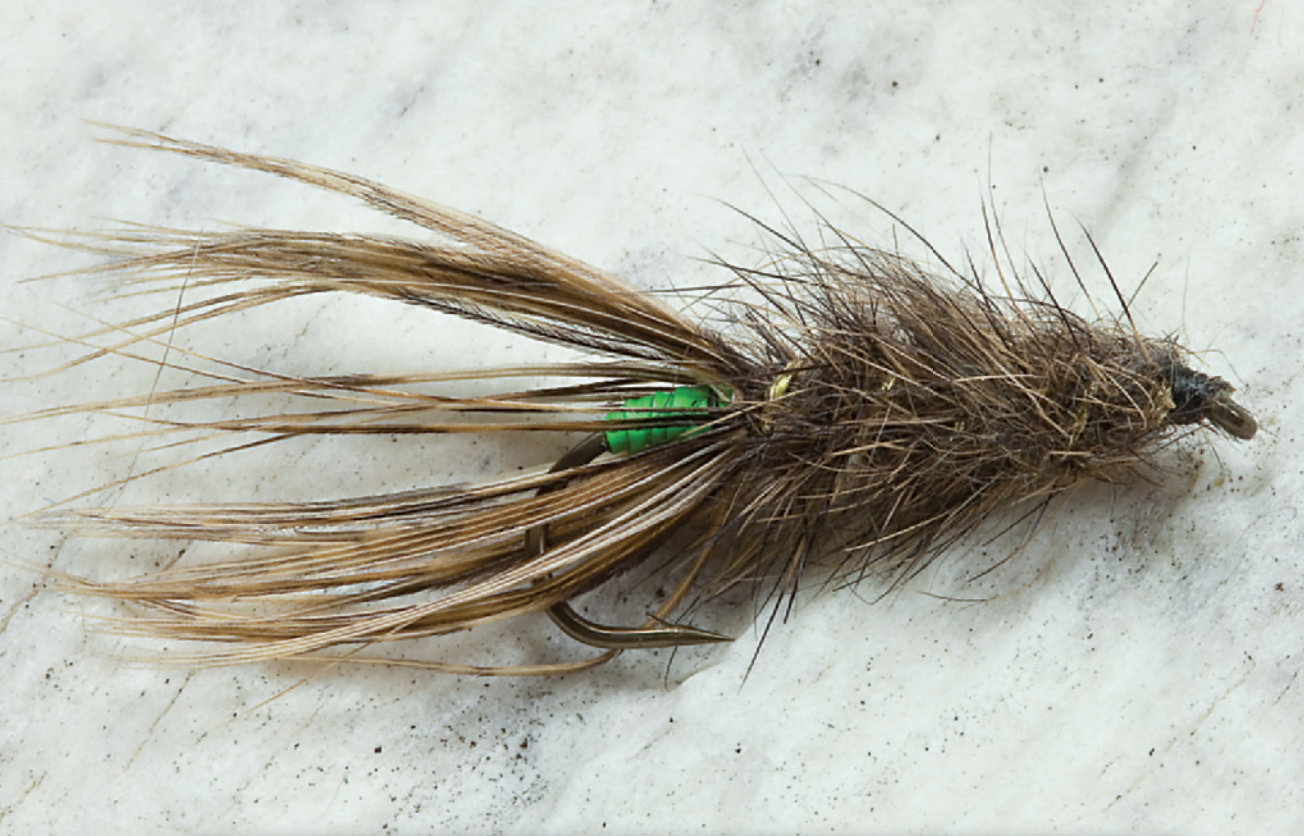
LOST CADDIS
HOOK: 3X- or 4X-long nymph hook, sizes 8 to 4.
THREAD: Brown or tan Uni-Thread,
UNDERBODY: Two layers of lead or copper wire.
TAG: Fluorescent green Flexi-Body.
LEGS: Speckled tail or long back partridge feather.
BODY: Rabbit or squirrel dubbing.
RIB: Gold wire.
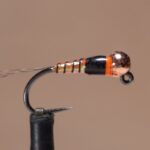
I fished that first Leadheaded Grayling Bug during the winter and first part of the new season with great results, but when I tried using the fly in the shallow waters of Central Europe, it got stuck in the weeds or on the streambed. Then I had a marvelous idea that other fly designers have also used: I placed the split shot on a piece of monofilament tied on just above the hook eye like a little jig head. This improved version would fish with the hook point on top, and I named the pattern the Leadheaded Grayling Bug Number 2. That fly is now better known as the Leadhead. Ingo Karwath, from Germany, developed a pattern using the same tying technique around 1985; I guess Ingo and I had the same idea around the same time. His pattern is known as the Cousteau Nymph, and it is also an excellent fly.
The patterns did not change much after 1984. I experimented with other dubbings, but I always came back to rabbit fur, squirrel, or a blend. I also experimented with a blend of squirrel dubbing and very fine synthetic fibers; it works extremely well in certain waters. I tried many different materials and colors for the tag, but fluorescent green Flexi-Body creates the most spectacular results and is by far the best.
Fishing the Leadhead
The weight of the Leadhead can make it difficult to cast, especially if you are new to using heavily weighted flies. Use a rod with a stiff tip, reduce your casting speed, and avoid hitting yourself in the back of the head with the fly. Fish the Leadhead using the following techniques.
- DEAD DRIFTING – With this technique, cast upstream or up-and-across, and let the fly drift downstream as naturally as possible. My eyesight is not good, so I generally use a small plastic strike indicator attached to the leader.
- LIFT–SINK–LIFT – Cast upstream and let the fly sink. When you think the fly has sunk to the proper depth, lift it briefly with the rod tip and let it sink again. Repeat this sequence several times throughout the entire drift.
- STILLWATER MOTION – When fishing in still waters, I use the rod tip extensively to give the fly motion. Combine a little movement of the rod tip with slow draws of line with your non-casting hand.
A couple of years later, Oliver Edwards made the latest improvement to the Leadhead. He is a very good friend and one of the best fly tiers of realistic flies that I know. Oliver loved my Klinkhåmer but wasn’t enthusiastic when I gave him a few of my Leadheads. He kept them in his fly box for quite a while until he fished the River Ure with a group of friends and no one was successful due to terrible weather conditions. Oliver tried my Leadhead and was awestruck when he landed fish after fish. From that moment onward, he was impressed with my series of weighted bugs and designed his own more realistic version of the Leadhead he calls the Peeping Caddis. He describes how to tie the Peeping Caddis in his magnificent book, Fly Tyer’s Masterclass.
The Leadhead is very simple to tie and it catches many species of fish under a variety of conditions. I have used i t in many parts of the world with great success, and I know it will work in your local waters.
Hans van Klinken was commander of the Royal Dutch Army Gunnery School. Hans retired a couple of years ago and now devotes all his time to fly fishing: writing, teaching, designing new patterns, and chasing fish. You can follow Hans via his website, www.flyfishinggazette.com.