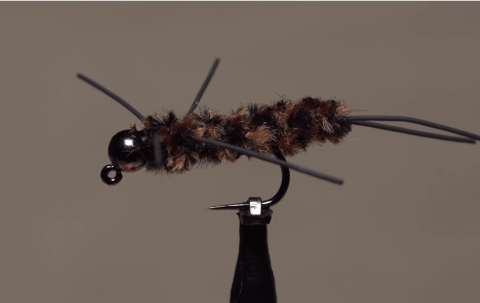
Because of the many problems associated with longshank hooks, Kinney eventually adopted an articulated design, tying hackle feathers and marabou onto a stinger hook attached to the front shank using a loop of Dacron. This allowed him to tie a larger fly that had more movement in the water, and it improved his hookup and landing rates. All this makes for one very fi shy pattern when targeting winter steelhead in discolored water.
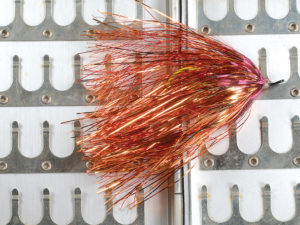
Prom Dress—Gold
Front body shank: 25-millimeter Waddington shank.
Stinger hook loop: 30-pound-test Dacron.
Stinger hook:SGamakatsu Octopus, size 2.
Thread: White 3/0 (210 denier).
Body: Silver Diamond Braid.
Underwing: Natural red squirrel tail.
Body: Gold Flashabou.
Collar: Purple jumbo guinea fowl.
The Prom Dress is yet another creation of veteran steelheader Scott Howell. As the name implies, the Prom Dress is flashy, puffy, and big. The main ingredient is Flashabou. Utilizing a tying concept also found on the Ostrich Intruder, Squidrow, and Skagit Minnow to maximize size using minimum amounts of material, a bump of dubbing, chenille, or hackle keeps the Flashabou splayed out and gives the Prom Dress a large silhouette. (Deer hair can serve for this purpose, but it will give the fly buoyancy and a slower sink rate.) Finish off the Prom Dress with a wrap or two of palmered guinea hackle in the front to prevent the Flashabou’s profile from slimming down in the current, and add dumbbell eyes to get the fly down deep. True to Howell’s tying style, the Prom Dress is innovative, effective, and offends many traditionalists.
CLEAR-WATER STEELHEAD PATTERNS
My clear-water fly box holds patterns that have very little in common with flies designed for fishing dirty water. The game completely changes when rivers get low and clear. Steelhead slow their upstream migration and hold up, waiting for increased water levels to continue pushing toward their spawning grounds. Unlike fresh fish that just entered the river, steelhead that have been in the river for a while can get lockjaw and become very finicky. In general, in clear water, steelhead tend to respond more positively to small, sparse flies. The big, nasty-looking flies that can be the hot ticket for off-color water will likely spook as many fish as they fool in low, clear water, especially on sunny days. This is not always the case, and it is important to remember these generalizations do not apply to every situation. Fresh fish that are still relatively close to the salt and have not been pressured by other anglers might strike those “in your face” patterns, but smaller, more subdued flies seem to catch more fish when the water is running low and clear.
The Polar Shrimp has been a staple in the fly boxes of many steelheaders since it was popularized in the 1930s on California’s Eel River. Sometimes less is more, and that is certainly the case with this pattern. The Polar Shrimp is a simple design that requires few materials, but it has accounted for more than its share of fish, especially close to tidewater. Designed to imitate a shrimp, the body of the Polar Shrimp is tied using orange chenille. The white calftail wing gives it a classic style, and the hackle collar and tail impart movement. You can whip out a dozen Polar Shrimps in varying sizes in no time, and it’s well worth doing because they are a good bet for when water levels drop and the flow gets really clear.
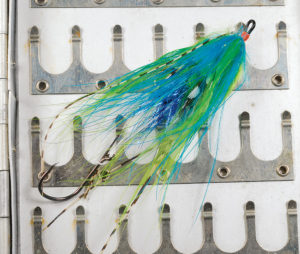
Hoh Bo Spey
Front body shank: 25-millimeter Waddington shank.
Thread: Red 3/0 (210 denier).
Stinger hook loop: 30-pound-test Berkley Fireline.
Hook: Owner SSW, size 4.
Body: Blue UV Ice Dub.
Legs: Jumbo natural guinea fowl.
Collar: Chartreuse and turquoise marabou.
Feelers: Lady Amherst tail fibers
Charles St. Pierre’s Hoh Bo Spey is one of my clearwater winter favorites. It is much smaller than my dirtywater picks—I normally tie it on a 25-millimeter-long or shorter Waddington shank—but it still has a lot of lifelike movement in the water, thanks to its wispy marabou and Lady Amherst feather fibers. Rarely tied with weight or Flashabou, the Hoh Bo Spey is a subtle winter sleeper. St. Pierre wraps the shank with flash dubbing, which sparkles through the marabou. I often use dubbing that has no flash, but I always carry a few variations of this important fly.
The Pick Yer Pocket came from the vise of Alaska and Washington State guide Brian Kite. Crafted in a style reminiscent of the Ostrich Intruder, the Pick Yer Pocket has some fundamental differences. Most important, it is usually tied considerably smaller and with less flash. The smaller size is largely due to the key material used in this fly: hackle tips. With a body made of hackle tips and Lady Amherst fibers attached to a short shank, this pattern is pretty sparse. Tying it with little or no flash makes the Pick Yer Pocket one of my favorite flies for clear-water conditions. I fish it in subdued lighter tones when the sun is out, and darker colors for overcast days or first and last light when I think I can get away with a little larger fly than a Hoh Bo Spey.
The General Practitioner, or “GP,” is a legendary steelhead fly with many fish to its credit. Like other seafood-themed patterns, it was originally tied to imitate a shrimp. Colonel Esmond Drury came up with the GP to fish for Atlantic salmon in the 1950s when using live prawns was outlawed on his home waters of England’s River Test. The GP has since found its way into the fly boxes of countless steelhead anglers. Its palmer wrapped saddle-hackle body gives it plenty of flexing legs to help entice the strike of nervous steelhead in low, clear water en route to their spawning grounds.
The Reverse Marabou Popsicle is a creation of seasoned Oregon guide Tom Larimer. It utilizes a different tying technique, borrowed from saltwater streamers, to minimize the amount of material necessary to create the desired profile. By tying the marabou on backwards, pointing in the reverse direction as usual, the fibers fight the current when under tension and maintain a pleasing shape. This hollow design means that very little material is necessary to achieve the desired silhouette. The Reverse Marabou is usually tied with multiple sections of marabou, lots of flash, and heavy eyes for fishing dirty water. The pattern seen here combines the reverse-tying technique with the look of George Cook’s Popsicle, a proven Alaska pattern that is a simple but effective marabou streamer not usually tied in reverse fashion. By using only one clump of marabou, no eyes, and sparse flash, it makes for a killer winter fly when the water clears.
Tie all these flies in different sizes and colors, and with varying amounts of flash and weight. The patterns themselves don’t necessarily dictate what will be a better fly for fishing clear versus dirty water; I sometimes fish small, subtle Intruders in clear water, and large, flashy Reverse Marabou streamers in dirty water. These are simply my favorite flies to tie with certain conditions in mind.

Understanding the characteristics that make a particular design effective under a given set of conditions is the key to tying better winter steelhead flies and knowing when to fish them. You are sure to catch more steelhead on your own flies if you adapt your approach to meet the specific conditions you face. Keep your boxes stocked with a selection of flies tied for a wide range of circumstances, and you will be better prepared and remain in the game regardless of what the river throws at you.
Loren Elliott is a talented young guide and terrific photographer who lives in Northern California. Loren guides throughout the Pacific Northwest.
Fly Box

General Practitioner Hook: Gamakatsu T10-3H, size 2, or Alec Jackson Steelhead Iron, size 3. Thread: Red 3/0 (210 denier). Tail (antennae): Orange bucktail. Eyes: Golden pheasant tippets. Rib: Silver wire. Legs: Orange neck hackle. Body: Fluorescent orange UV Ice Dub. Carapace: Golden pheasant breast feather.
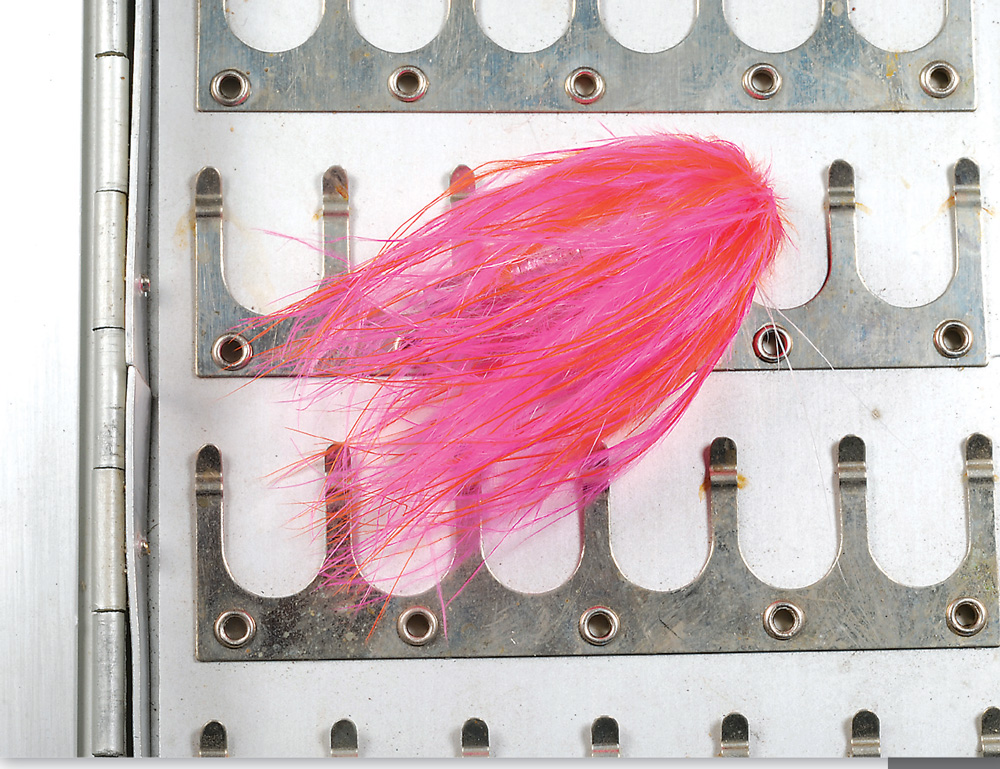
Reverse Marabou Popsicle Tube: HMH small-diameter plastic tube. Thread: Orange 3/0 (210 denier). Head: Orange and pink marabou. Collar: White arctic fox tail. Body: Pink pearl Flashabou.
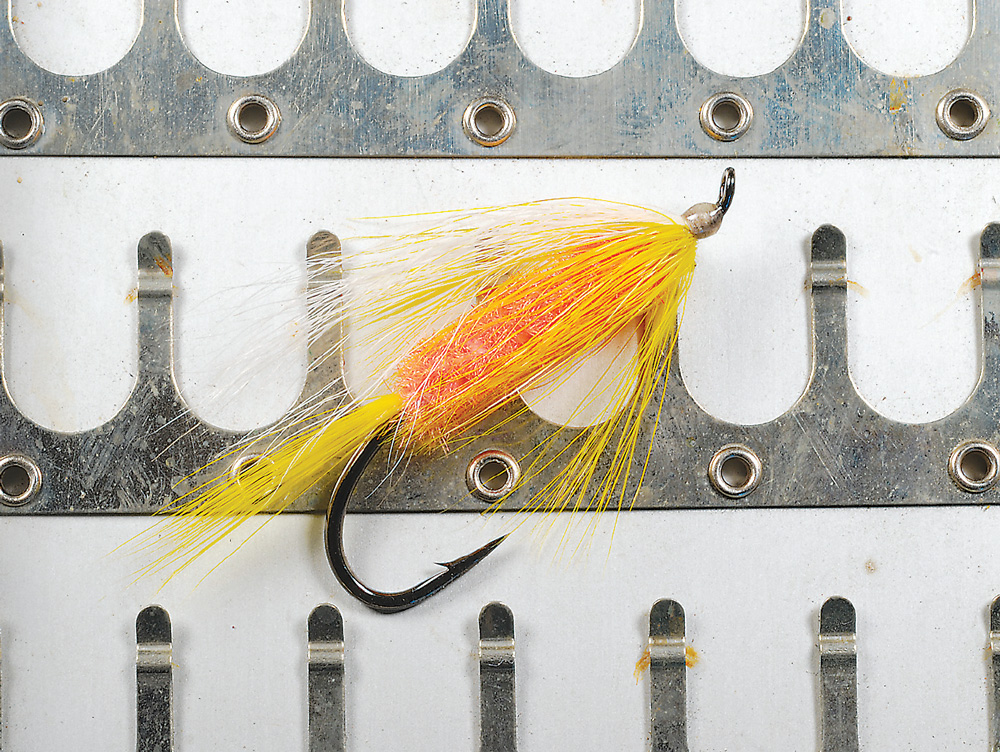
Polar Shrimp Hook: Gamakatsu T10-6H, size 2. Thread: White 3/0 (210 denier). Tail: Yellow saddle tips. Body: Orange chenille. Collar: Yellow saddle hackle. Wing: White calftail.
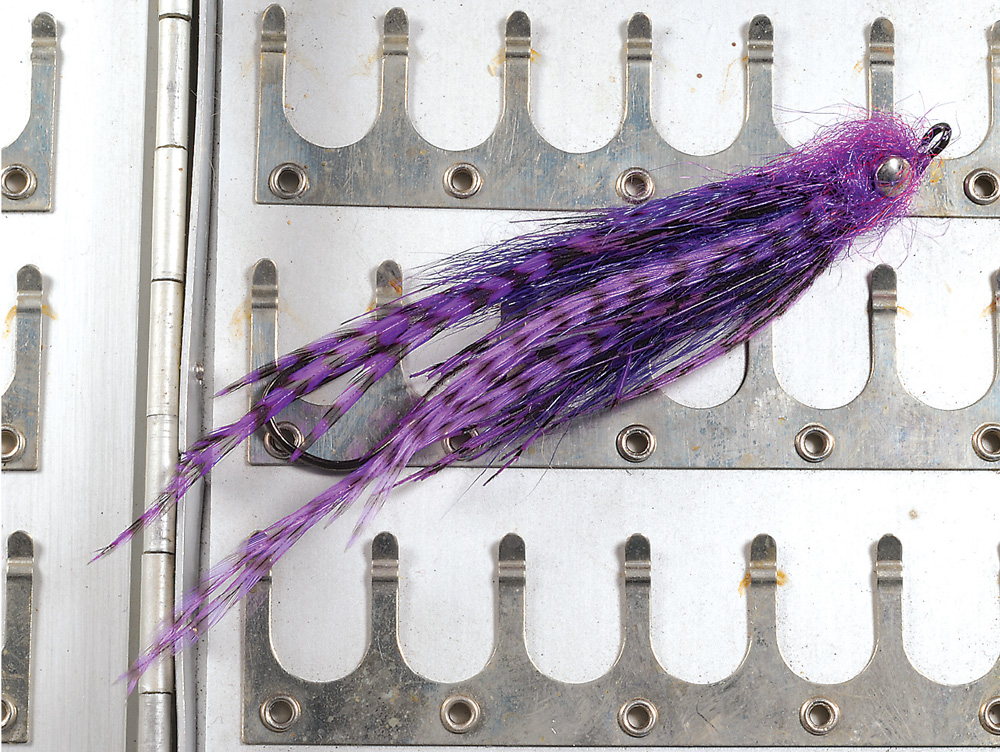
Pick Yer Pocket Front body shank: 35-millimeter Waddington shank. Thread: Black 3/0 (210 denier). Stinger hook loop: 30-pound-test Berkley Fireline. Hook: Owner SSW, size 4. Tail: Purple grizzly hackles. Body: Purple Antron dubbing. Collar: Purple deer hair and purple grizzly saddle hackles. Eyes: Silver dumbbell. Head: Purple Antron dubbing.
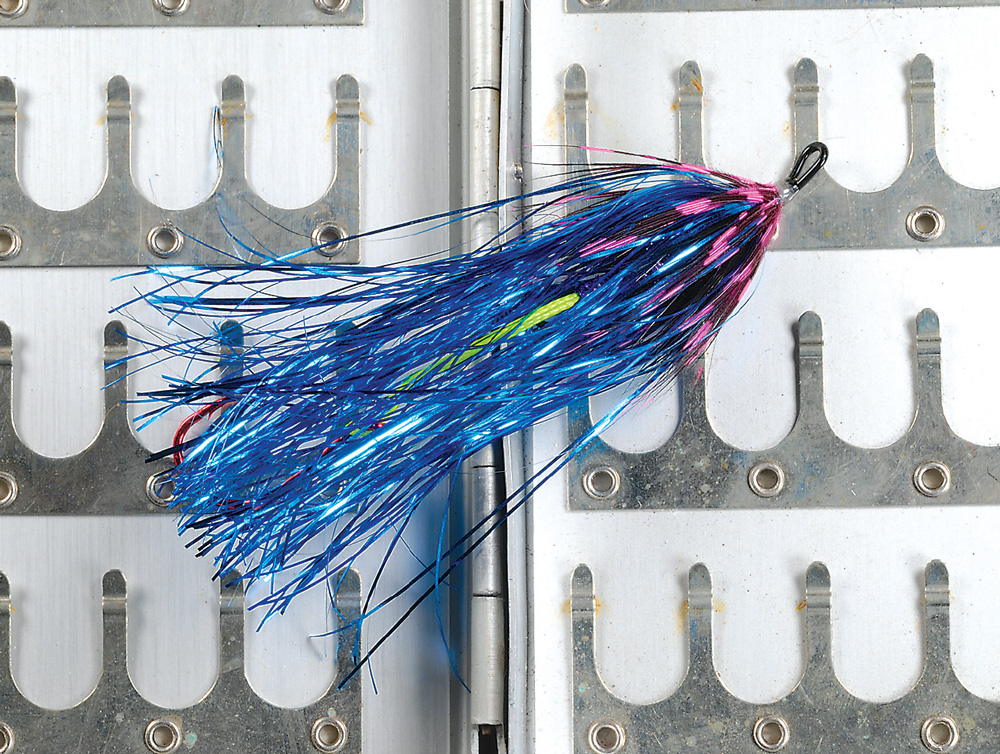
Prom Dress—Blue Front body shank: 25-millimeter Waddington shank. Stinger hook loop: 30-pound-test Dacron. Stinger hook: Gamakatsu Octopus, size 2. Thread: White 3/0 (210 denier). Body: Purple Diamond Braid. Underwing: Black squirrel tail. Body: Blue Flashabou. Collar: Purple jumbo guinea fowl.