by Tim Jacobs
During the summer, I rise early, make coffee, and then head out for some early-morning bass fishing. After several hours of throwing flies to the numerous largemouth bass inhabiting the lake, I begin to feel caffeine deprived and head back to our cottage. Sometimes I return for more fishing, but often I just refill my cup, grab the garden hose, and water our flower and vegetable gardens.
In addition to being a fly tier and fisherman, I am also a gardener. I acquired the love of gardening from my wife, Susan; she is the real genius when it comes to growing things. It’s a rare plant she can’t identify, and she’s the mastermind behind planning all our gardens. I stick in a plant here and there, but she’s the one who makes it all come together.
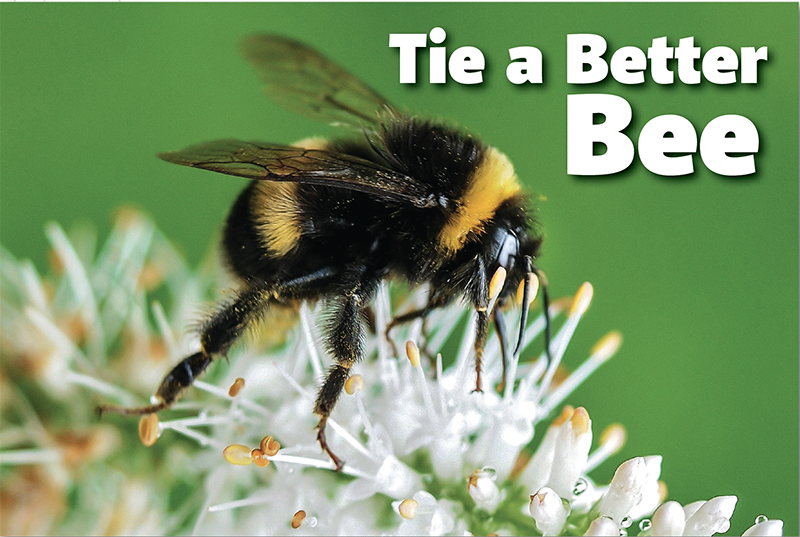
One of the aspects that most fascinates me when watering is watching the bees. They work the flowers with almost mathematical precision. While numerous species of bees are normally present, one of the most interesting to watch is the common eastern bumblebee. This yellow-and-black insect is the largest I see, and it is usually undisturbed by my presence.
Bees have coevolved with flowers and are descendants of ancient wasps. Like caddisflies, bees go through a complete metamorphosis, transitioning from eggs to larvae to pupae, and finally into adults. Unlike honeybees, bumblebee colonies die off in the winter with just the queen overwintering. It will emerge in the spring to begin a new colony.
Early-season bumblebees are smaller; the larger bumblebees arrive later in the summer. More than 20,000 species of bees worldwide pollinate over 90 percent of the world’s wild plants, including aquatic plants. Bees commonly end up on the water around these plants, providing the fish with an easy meal.
Designing a Better Bee
John is a friend and fellow tier from Grand Junction, Colorado. He was interested in tying a bumblebee imitation. John had tried using numerous materials like chenille, but they made the fly too heavy. He suggested that I create a bumblebee using spun deer hair. At about the same time, Rick Takahashi and Jerry Hubka asked me to contribute a fly to their book Modern Terrestrials. I wanted to submit a spun-deer-hair bumblebee.

I tied small deer-hair bass bugs with a bumblebee color scheme for many years, but I wanted this new fly to look more realistic. I was certainly not the first to think of making such a pattern. In his book This Wonderful World of Trout, which was published in 1963, Charles K. Fox mentions using a black-and-white hornet imitation to win an annual fishing contest. While there is not a recipe for that fly in his book, I always imagined it was made using clipped deer hair.
Over the years, numerous authors have included deer-hair bumblebee patterns in their books. Tying and Fishing Terrestrials by Gerald Almy, Ed Shenk’s Fly Rod Trouting, and Terrestrials by Harrison R. Steeves III, are just a few of the volumes containing recipes for making deer-hair bumblebees. Rusty Gates, of Gates Au Sable Lodge, in Michigan, also had a deer-hair bumblebee used by anglers in that region.
Most North American bumblebees are yellow and black, but a few have white butt ends. I like the look of the three colors, so when tying a pattern for Modern Terrestrials, I made a fly in this color scheme. The pattern I submitted for that book was just a variation of the many bumblebee imitations that came before mine, but keeping with the modern theme of the book, I used a synthetic foam material for the wing.
Making the Bee Even Better
Bluegills, as well as trout under the right circumstances, really loved my new fly. After fishing it for a summer, however, I was not entirely satisfied with its appearance.
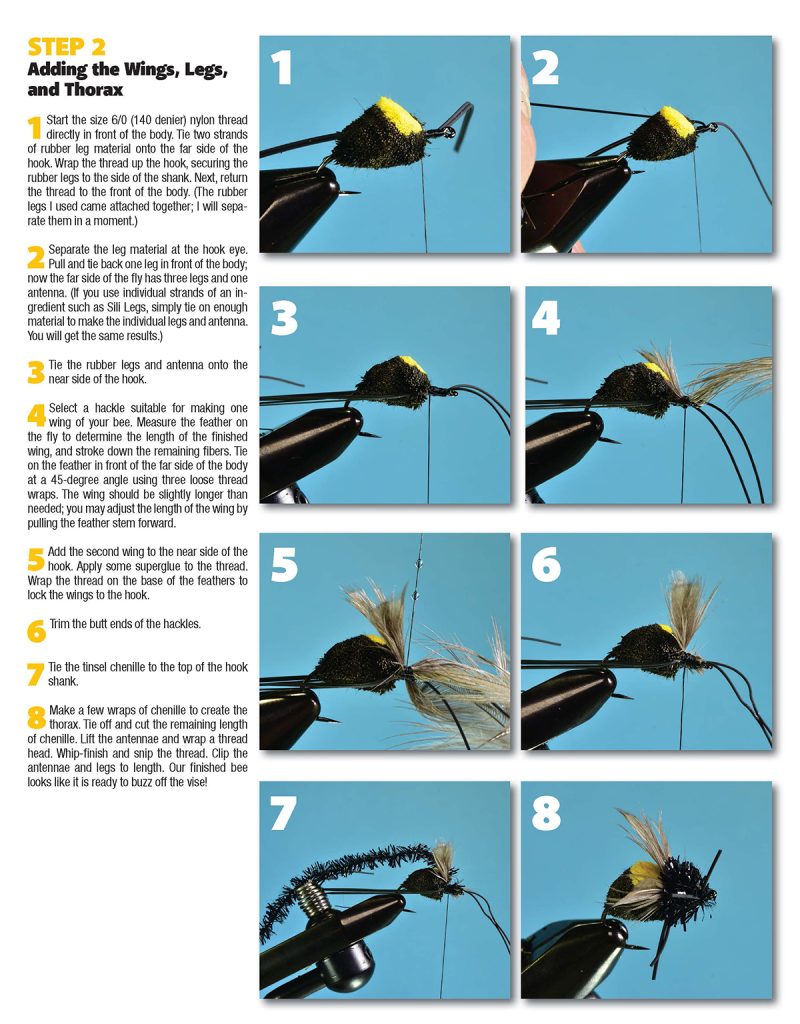
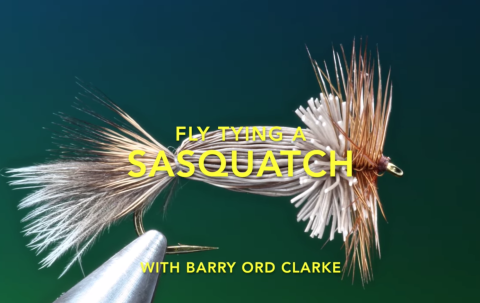
I changed the wing material to gray cul de canard, but I have also used Whiting Farms Winger Cape feathers. I think both these feathers improve the look of the fly, and it fishes as well as or better than the foam-wing version. Additionally, I was spinning three single bunches of white, yellow, and black hair, but now I use a stacking technique. This allows for more color separation between the top and bottom of the abdomen, and creates bars of color on the back that approximate the color of a real bumblebee.
When fishing a lake, look for cover that attracts bass and panfish; any flowering water plant is a prime target. Cast the fly to the edge of the cover, drop the rod tip close to the surface, and tighten up to the fly. Rather than retrieving the bee across the surface, simply twitch it to simulate a struggling insect. If fish are present, it normally doesn’t take long for one to eat the fly.

Bees are fascinating and colorful insects that deserve our attention. They are great subjects for our fly tying endeavors.
Tim Jacobs comes to us from the Roaring Fork Valley of Colorado. He has published numerous articles and authored the great book Tying and Fishing Deer Hair Flies. Tim appears at numerous fly fishing shows and shops as a demonstration fly tier.